Design Services


Air-Supported Membrane Storage Sheds vs. Traditional Storage Structures: Advantages and Selection for the Enclosed Storage of Bulk Materials
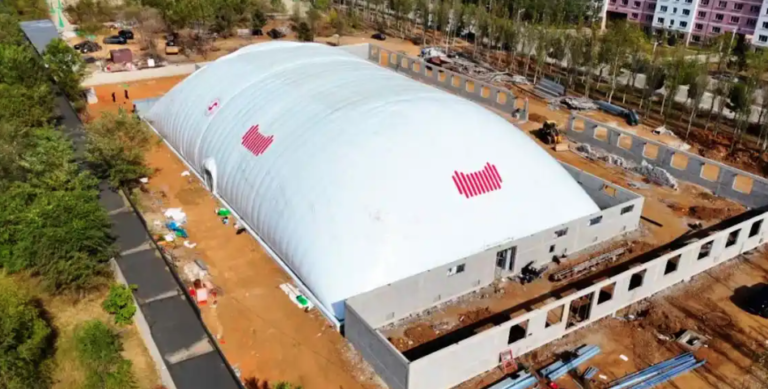
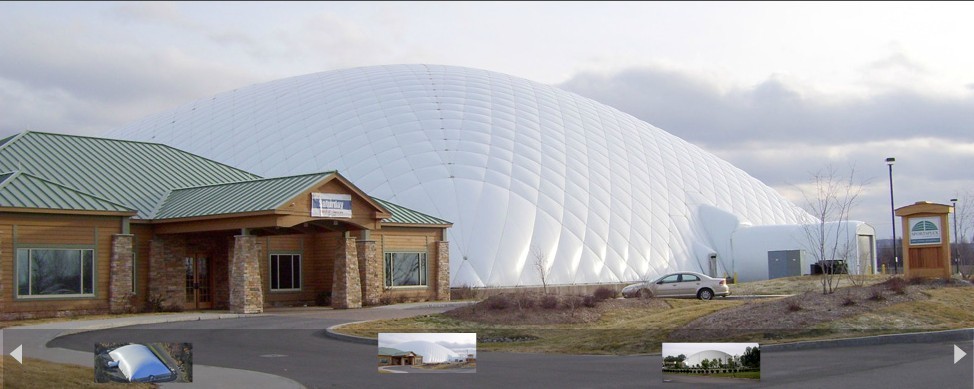
Air-supported membrane storage sheds are industrial, enclosed storage facilities for bulk materials that utilize an air-supported membrane structure. By maintaining a slight positive internal air pressure, the membrane is kept inflated, allowing for large-span storage spaces completely free of beams or columns. Zhongke Air-Supported Structures (Zhongke Qimo) specializes in the R&D and construction of these facilities. Leveraging a full-industry-chain qualification and numerous patented technologies, the company provides customized, enclosed storage solutions for sectors such as coal, sand and gravel, and mineral powder.
What Is an Air-Supported Membrane Storage Shed and How Does It Work?
Often referred to as air-supported storage sheds or inflatable membrane silos, these structures are widely used in industrial warehousing. When coal yards, sand and gravel depots, or mineral powder storage sites consider enclosure upgrades, air-supported membrane sheds are frequently a top priority. Unlike traditional steel-structure or brick-and-concrete sheds, these facilities do not rely on steel beams or columns for structural support. Instead, an intelligent air-supply system maintains a slight positive pressure inside, keeping the high-strength membrane material taut. This, combined with a network of steel cables and a secure foundation, allows the structure to withstand wind and snow loads, creating a stable, large-span storage environment.
A complete air-supported membrane storage system consists of the membrane envelope, a steel cable support network, an intelligent inflation and pressure-stabilization system, air-lock access portals, backup emergency blowers, and fire-monitoring modules. For projects delivered by Zhongke Air-Supported Structures, the membrane material is prefabricated in the company’s own factory. On-site work is limited to foundation anchoring, membrane panel joining, and inflation—eliminating the need for “wet” construction processes (such as pouring concrete) and significantly reducing both the complexity and duration of on-site construction.
It is important to note that air-supported membrane storage sheds are fundamentally different from simple inflatable tents. Air-supported storage structures are classified as permanent or semi-permanent industrial buildings. They must undergo rigorous structural mechanics analysis, including calculations for wind and snow loads, to ensure compliance with industrial safety standards for material storage. In contrast, inflatable tents rely on air-filled bladders for support; they cannot withstand long-term exposure to wind and snow, and therefore are unsuitable for use as large-scale industrial storage structures. Furthermore, air-supported structures are exceptionally lightweight and impose minimal demands on the load-bearing capacity of the foundation. They can be installed in diverse locations—such as repurposed industrial sites, tidal flats, or mountainous terrain—which is a key factor in their widespread adoption.

Key Advantages of Air-Supported Storage Structures Over Traditional Alternatives
As environmental regulations continue to tighten, the limitations of traditional steel-structured storage facilities—particularly regarding dust control, construction timelines, and investment costs—have become increasingly apparent. With their multifaceted advantages, air-supported storage structures are emerging as the preferred solution for upgrading storage facilities in sectors such as coal, sand and gravel, ores, and chemical powders.
First, they offer vast, column-free interior spaces, resulting in superior storage efficiency. These structures can span over a hundred meters without the obstruction of steel beams or columns, allowing loaders, conveyor systems, and heavy-duty forklifts to operate freely. Material stacking and handling are not constrained by internal structural elements. For a given footprint, an air-supported structure provides a significantly larger effective storage volume than a traditional facility, making it particularly well-suited for the centralized storage of large quantities of bulk materials.
Second, they provide excellent containment and dust suppression, ensuring compliance with environmental regulations. Air-supported structures—such as those provided by Zhongke Air-Supported Structures—utilize high-strength PVDF membrane material. The membrane panels are heat-sealed, and the structures are equipped with interlocking airlocks to maintain a stable, slightly positive internal air pressure. This effectively prevents dust from escaping, delivering outstanding dust suppression. For facilities like coal yards, sand and gravel depots, or sites for storing contaminated soil, these structures address fugitive dust emissions at the source, helping enterprises avoid environmental penalties—a primary reason for their selection. Additionally, the membrane material is highly water-resistant, preventing rainwater from seeping inside and minimizing material loss due to leaching or water damage. Third, the construction period is short, allowing for rapid commissioning. Traditional steel-structure storage sheds often require several months from design and production to completion. In contrast, the membrane materials for air-supported storage sheds are entirely factory-produced, significantly reducing on-site construction time. Large-scale air-supported sheds can be inflated and delivered in a matter of days, enabling enterprises to begin storing materials quickly and shortening the project’s payback period.
Fourth, the overall cost is lower, and energy efficiency is significant. For a given area, the total construction cost of an air-supported shed can be more than 30% lower than that of a steel-structure shed, with reduced requirements for foundation work. PVDF membrane materials offer excellent heat reflection and light transmission properties; natural daylight enters the structure during the day, lowering daytime lighting energy consumption. Furthermore, when equipped with an insulation layer, these sheds provide superior thermal insulation, minimizing temperature fluctuations inside and effectively reducing the energy required for ventilation and climate control systems—ultimately creating an eco-friendly storage space.
Fifth, they offer flexible assembly and disassembly, allowing for relocation and reuse. As a form of prefabricated construction, an air-supported shed can be fully dismantled, transported to a new site, and reassembled. This makes them highly suitable for short-term projects or temporary material transit storage, significantly cutting costs associated with redundant construction.
Primary Application Scenarios for Air-Supported Storage Sheds
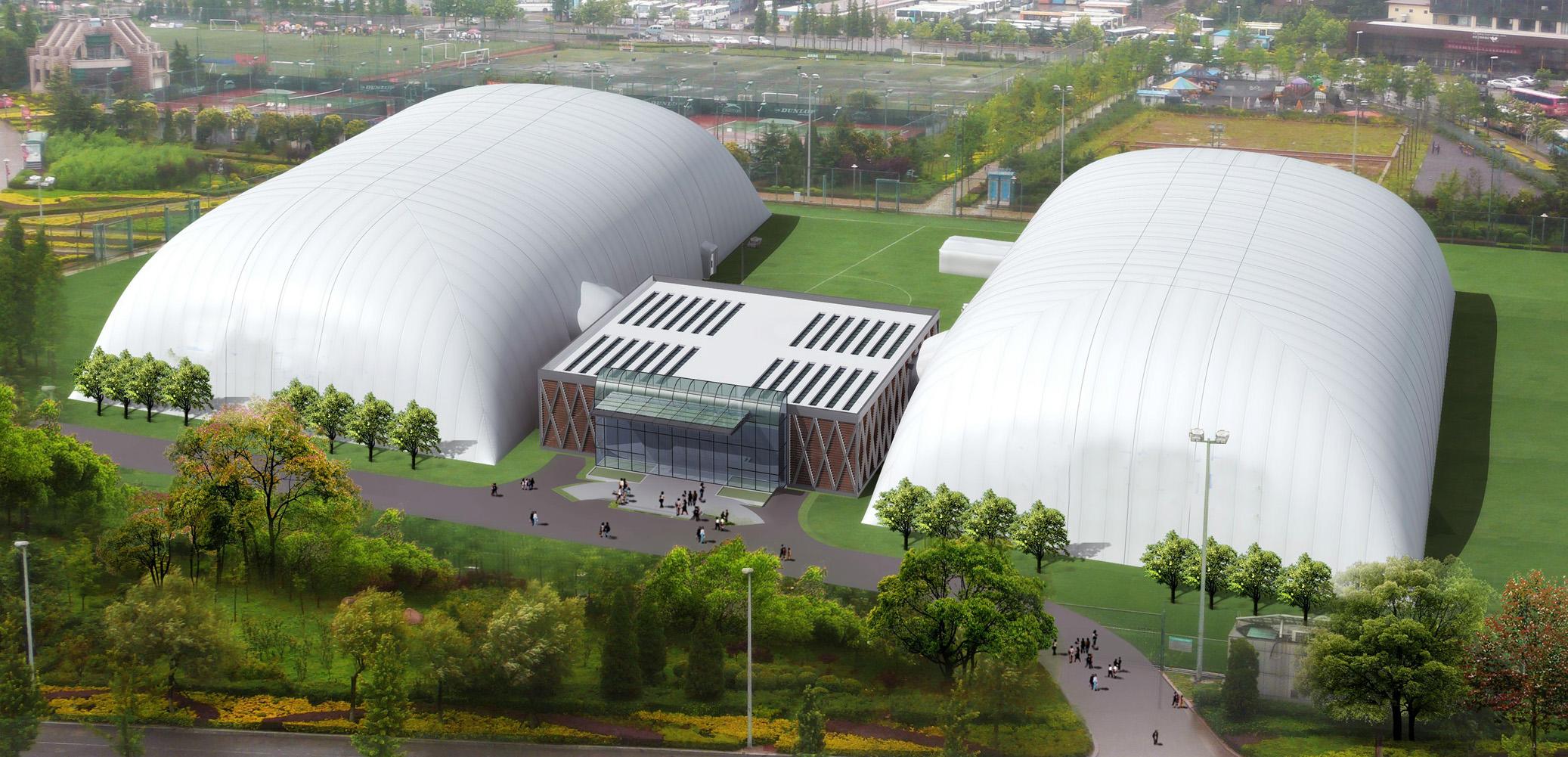
The range of applications for air-supported storage sheds continues to expand. They are used for the enclosed storage of industrial bulk materials as well as for logistics transit storage. The selection of membrane materials and system configurations is specifically optimized to meet the requirements of different industries.
1. Air-Supported Sheds for Industrial and Mining Bulk Materials: These are the most common application scenarios, including storage for coal, sand and gravel aggregates, mineral powders, metallurgical clinker, and solid waste or contaminated soil. The primary objective in these cases is to ensure a sealed, dust-free environment, facilitating the conversion of open-air stockpiles into enclosed facilities. Zhongke Air-Supported Structures (Zhongke Qimo) has successfully implemented numerous projects—ranging from coal storage bases to various sand and gravel yards—accumulating extensive experience in the deployment of industrial air-supported storage sheds. 2. Logistics and Transshipment Air-Supported Storage Structures: Designed for large-scale industrial parks, these structures serve as temporary storage or cargo-handling facilities. They provide a rapid solution for expanding storage capacity, offering spacious environments for housing packaged goods, equipment, and materials.
3. Air-Supported Storage for Other Industries: Tailored for sectors such as chemical powders, construction raw materials, and bulk earthwork storage. These structures utilize specialized, corrosion-resistant membrane materials—customized based on the specific chemical properties of the stored goods—and are equipped with ventilation and gas-monitoring systems to ensure safe storage operations.
It should be noted that the selection of an air-supported storage structure must account for the specific characteristics of the materials being stored, local wind and snow loads, and environmental regulations; a “one-size-fits-all” standardized template is not appropriate. Zhongke Air-Supported Structures (Zhongke Air-Film) provides bespoke structural design and system configuration for each project, based on local meteorological data and the specific type of materials to be stored.
Ensuring Safety: Addressing Concerns Regarding Air-Supported Storage Structures
Clients encountering air-supported storage structures for the first time often have concerns regarding safety—specifically concerning wind resistance, fire protection, and power outages. It is important to clarify that professional-grade air-supported structures are not merely “simple tents”; they are engineered with comprehensive structural safety guarantees.
Zhongke air-supported structures utilize an orthogonal diagonal cable-net system that transfers wind and snow loads to an anchored foundation. This design is capable of withstanding extreme conditions, including Category 16 typhoons, making them suitable for high-wind coastal regions as well as cold, snow-prone northern areas. The membrane material used is a B1-rated flame-retardant PVDF fabric, enhanced with TiO2 self-cleaning technology. This material offers exceptional flame retardancy, aging resistance, and corrosion resistance; it is highly durable for long-term outdoor use, resisting cracking or degradation, and ensuring the long-term, stable operation of the structure.
Regarding power reliability, these structures are equipped with dual power supply inputs and backup emergency inflation systems. In the event of a mains power failure, the backup equipment maintains internal air pressure, providing sufficient time for emergency evacuation. Furthermore, the structures feature real-time pressure monitoring and automated alarm systems. Internal air pressure is monitored remotely, with automatic alerts triggered by any irregularities. Operations and maintenance personnel can monitor the status of the facility from afar, enabling intelligent, remote oversight. In terms of fire safety design, the interior of the air-supported storage structure includes designated fire access lanes. It can be equipped with sprinkler systems, smoke detectors, and dust monitoring equipment, all designed in strict accordance with fire safety regulations to meet the fire protection requirements for industrial material storage.
If you are interested in air-supported storage structures or have specific requirements, please feel free to send us a direct message. Zhongke Membrane Structure looks forward to the possibility of communicating and collaborating with you.