Design Services

Why are more and more construction sites using “foundation pit air-supported structures”?
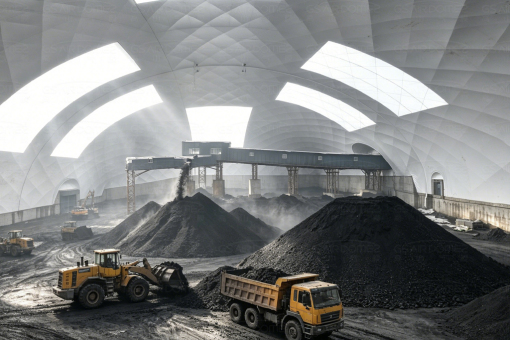
The primary reason for the growing adoption of “foundation pit air-supported structures” (air domes) is their ability to contain dust and noise at the source—keeping them within the construction site—when working in densely populated urban areas. At the same time, they help contractors maintain project schedules and avoid losses caused by work stoppages. Traditional methods like water spraying, covering with netting, or installing sound barriers are merely “remedial measures” with limited effectiveness. In contrast, an air-supported structure encloses the entire foundation pit, shifting the approach from “passive dust and noise mitigation” to “source containment.”
Specifically, several practical factors are driving their widespread adoption:
I. Environmental performance that traditional methods cannot match
In the heart of a city, construction sites are often located right next to residential buildings, schools, or hospitals, making it difficult for traditional dust and noise control measures to satisfy the surrounding community. The enclosed design of an air-supported structure offers a significant leap in performance:

Dust containment: Field tests in various locations show that these structures can block 90% to 99% of dust, effectively preventing it from escaping the site.
Noise reduction: Construction noise can typically be reduced by 20 to 40 decibels or more. For instance, at a project in Beijing’s Xicheng District, the use of an air-supported structure brought noise levels down from 70 decibels to 20 decibels, completely eliminating complaints from local residents.
II. Helping contractors “protect their schedules” and avoid work stoppages
For contractors, the cost of being forced to halt operations for rectification due to environmental complaints is extremely high. While the initial investment for an air-supported structure is significant (approximately 400–490 RMB per square meter), it often proves cost-effective in the long run:
Reduced risk of work stoppages: With fewer complaints, construction can proceed without interruption. At one project in Beijing, the use of an air-supported structure even shortened the construction timeline by 21 days.
Resilience against adverse weather: The structure creates an independent, enclosed environment, allowing construction work to continue even during heavy rain, extreme heat, or typhoons. In one project in Guangzhou, this approach is expected to save a cumulative total of over 170 days in the construction schedule; the air-supported membrane structure itself is also capable of withstanding gale-force winds of up to Level 14.
Winter thermal insulation: Functioning much like a greenhouse, the interior of the membrane structure maintains a temperature several degrees higher than the outside environment. This ensures the quality of concrete work during the winter and allows construction to continue without interruption throughout the cold season.

Policy encouragement meets more affordable technology.
Cities such as Beijing, Guangzhou, and Jinan are already promoting this construction method. In Beijing, construction sites that utilize air-supported membrane structures are granted “green-tier” status, which offers incentives—such as permission to continue operations during periods of heavy air pollution—and the Xicheng District even provides specific subsidies. Furthermore, these structures are made from materials like PVDF; they are more cost-effective than large-scale steel-frame enclosures and can be fully dismantled and reused, which further reduces long-term costs.
Of course, air-supported membrane structures are not a universal solution. For open construction sites located in suburban areas or regions without sensitive surroundings, traditional dust-control measures are more economical, making the membrane approach less cost-effective. Its primary application is clearly in the core areas of cities—sites where the surrounding environment is highly sensitive to disruption and where strict environmental protection regulations must be strictly upheld.
If you are interested in air-supported membrane structures for excavation pits or have a specific project requirement, please feel free to send us a direct message. Zhongke Membrane Structure (中科膜结构) looks forward to the possibility of engaging and collaborating with you.