Design Services



Characteristics of ETFE Membrane Structures as a Novel Building Material
Composition of ETFE Membrane Materials: Fluoroplastics represent an important category of plastics. ETFE membrane material is composed of an ethylene-tetrafluoroethylene copolymer; it is a transparent, non-fabric-based membrane with an elongation at break reaching 420%–440%. Its light transmission spectrum is similar to that of glass, earning it the nickname “soft glass.” To address the limitations of PTFE—specifically its inferior physical and processing properties—scientists worldwide conducted extensive research. Beginning in the 1970s, DuPont (USA) and Asahi Glass Co., Ltd. (Japan) developed ethylene-tetrafluoroethylene copolymer resins, marketed as the TEFZEL and COP series, respectively. Ethylene-tetrafluoroethylene copolymer is commonly referred to as ETFE (or F40). ETFE is the toughest fluoroplastic to date; while retaining the excellent heat resistance, chemical resistance, and electrical insulation properties of PTFE, it offers significantly improved radiation resistance, mechanical strength, and processability. Notably, it exhibits exceptional adhesion to metal surfaces, which has enabled the development of techniques for lining steel components with fluoroplastics—a process widely used for industrial applications requiring corrosion and wear resistance.
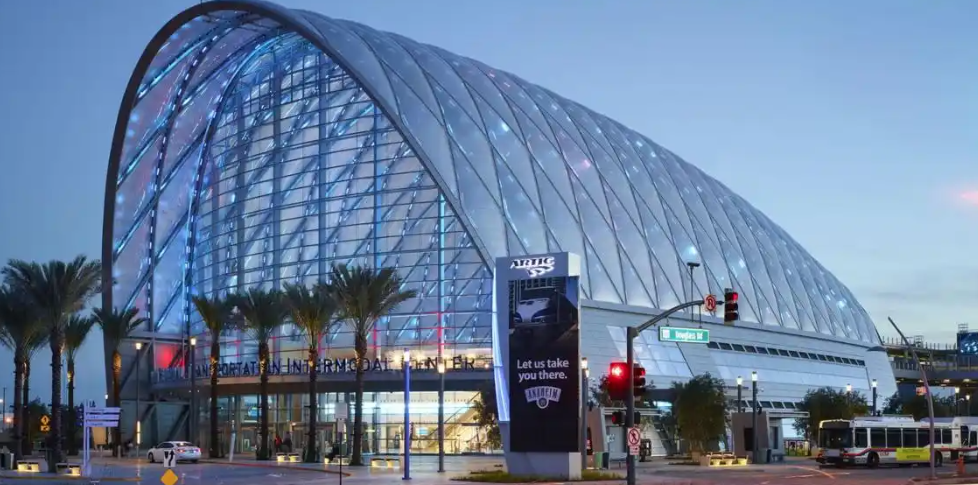
Since the 1990s, following architect Nicholas Grimshaw’s innovative, large-scale application of ETFE membranes in the Eden Project in the UK, the material has gained widespread recognition among architects, leading to an ever-increasing range of architectural uses. Currently, ETFE film is produced in widths of up to 2,350 mm and can be cut and heat-welded into various shapes and specifications. While theoretically available in any color, the most common versions used in practice are transparent, white, and blue. ETFE Pneumatic Membrane Structures: These structures are formed by inflating air into membranes made from high-polymer materials. The term “inflatable membrane structure” typically refers to an “air-supported membrane structure.” In this system, air is pumped into the building—maintaining an internal pressure approximately 1.001 to 1.003 times that of the external atmospheric pressure—to support the membrane envelope and preserve its stable shape.
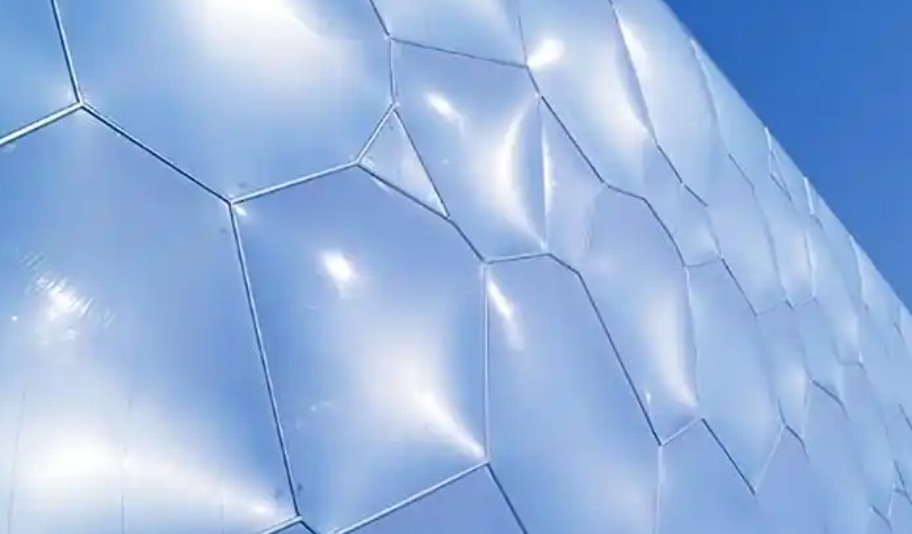
- The light transmission spectrum of ETFE membrane material is essentially identical to that of glass; it offers high ultraviolet (UV) transmittance and a visible light transmission rate exceeding 95%. By applying shading patterns to the surface or adjusting the membrane thickness, the transmission of light and UV radiation can be regulated, with light transmission rates controllable between 50% and 96%.
- It is suitable for long-term use within an ambient temperature range of -200°C to 150°C.
- In the event of a fire, the material will melt to form openings; while the edges of these openings may burn, the material does not produce open flames or molten droplets. According to my country’s national standard GB 8624, “Classification for Burning Behavior of Building Materials and Products,” it is classified as a B1-grade flame-retardant material.
- When configured as a multi-layered “air-cushion” membrane system, ETFE provides excellent thermal insulation.
- ETFE membrane material exhibits superior chemical stability and corrosion resistance.
- The ultimate tensile strength of ETFE membrane material exceeds 40 MPa. At stress levels below 20 MPa, the material remains elastic; it can be folded and possesses high tear resistance.
- It demonstrates exceptional weather resistance; long-term exposure tests indicate no degradation in its mechanical properties.
- Manufacturers typically provide a 10-year quality warranty for ETFE membrane material, though its actual service life can exceed 20 years.
- The membrane surface is smooth, resistant to dust and grime, and features excellent self-cleaning properties when exposed to rain. Furthermore, it offers high toughness, providing strong resistance against hail impact.
- Once its service life has ended, ETFE membrane material can be recycled, reprocessed, or melted down into raw granular material.