Design Services


Why Air-Supported Sports Arenas Are Becoming a New Architectural Choice
As air-supported structures (air domes) become increasingly common in my country, questions regarding their safety have naturally arisen: How strong a typhoon can they withstand? Will they leak if punctured by a needle or burned by a cigarette butt? What happens in the event of a fire? Zhongke Membrane Structure provides answers to these concerns.
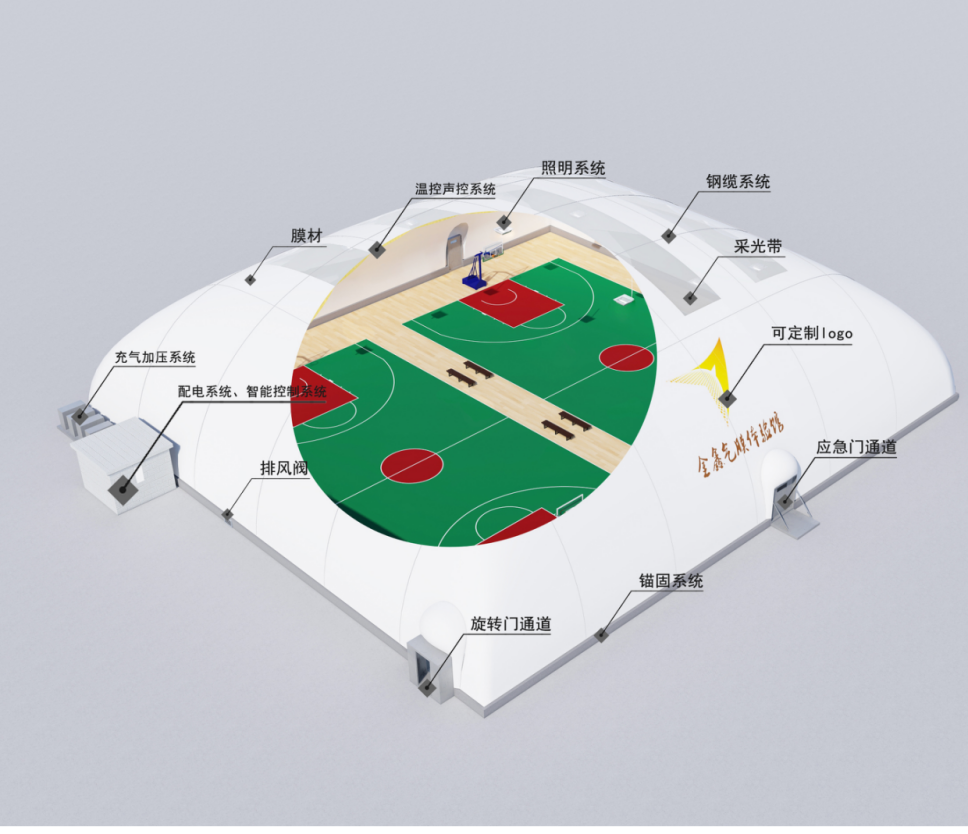
First, air-supported arenas can withstand typhoons of up to Category 16 (the highest level on the scale). Unlike traditional buildings, these structures utilize an inflatable design with a curved exterior. Reinforced by an external network of steel cables, their rigidity is significantly enhanced; external forces are distributed evenly across the ground-anchoring system, reducing the load on the membrane and ensuring structural stability. This allows these buildings to endure hurricane-force winds of 67 meters per second (Category 16 typhoons) and snow loads exceeding 250 kilograms per square meter. Furthermore, these arenas can serve as emergency shelters. Their expansive, column-free interiors provide ample space to accommodate large numbers of people and supplies. As flexible structures, they also possess inherent seismic resistance. In 2022, during Typhoon Ma-on (a Category 13 storm), an air-supported arena served as an emergency shelter, keeping workers safe throughout the night.

Second, air-supported arenas are far safer than one might imagine. The membrane materials used are highly durable—resistant to wear, corrosion, and immense pressure or tension—meaning that a needle prick or a burn from a cigarette butt will not compromise the structure. Should a leak occur due to improper handling, an intelligent air-pressure monitoring system tracks internal pressure in real time. If an anomaly is detected, the system triggers an immediate alarm and automatically compensates with additional air, while the manufacturer can promptly repair the affected area, ensuring continued use.

Beyond their structural and material advantages, air-supported sports arenas are also specifically designed with fire safety in mind. The membrane materials feature excellent flame-retardant properties, typically meeting the B1 fire-resistance rating. The interior of the air-supported structure is equipped with multiple emergency exits, as well as advanced fire alarm and suppression systems, ensuring rapid, effective fire response and personnel evacuation in the event of an emergency.
The safety and reliability of air-supported sports venues not only provide a comfortable space for physical activities but also inject new vitality into urban development. These structures can be rapidly deployed across a wide range of locations—from vacant urban plots to open spaces in remote areas—making them an ideal choice for sports facilities. This enhances land utilization while creating more opportunities for people to engage in sports.
In short, with their inherent safety and reliability, air-supported sports venues have emerged as a compelling new option in modern architecture. They not only meet the public’s demand for sports facilities but also contribute to sustainable urban development. We believe that in the future, these air-supported venues will flourish in even more locations, bringing further convenience and pleasant surprises to the public. The safety of these structures is guaranteed through multiple layers of protection, ensuring the well-being of all users.
If you are interested in air-supported structures or have a project in mind, please feel free to leave a comment or message. The team at Zhongke Membrane Structure looks forward to engaging in further discussion with you. Thank you!