Design Services


How are standard air-supported tennis courts constructed?
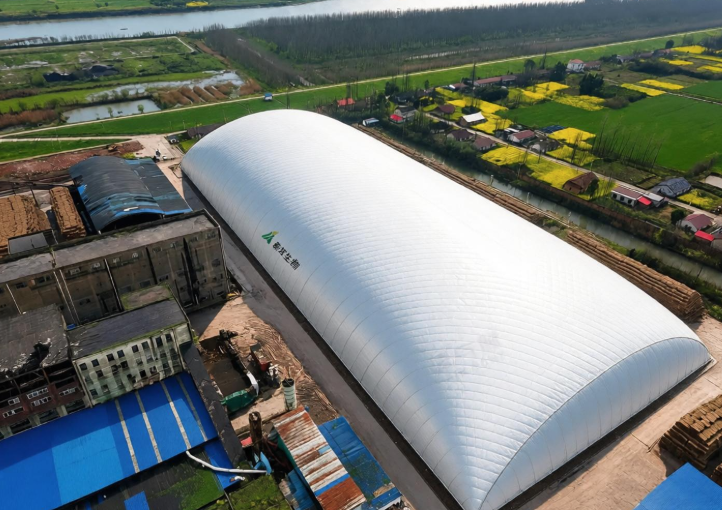
A standard air-supported tennis court is a type of sports facility that utilizes a high-polymer membrane as an outer shell, creating an enclosed space supported by air pressure. Its core features include an interior structure free of beams and columns, as well as a modular construction approach. Unlike traditional steel or concrete structures, air-supported facilities achieve self-equilibrium through aerodynamic principles; the tension of the membrane combined with internal air pressure creates a stable system that eliminates the need for conventional support structures, thereby maximizing space utilization. These facilities can span between 20 and 110 meters—sufficient to cover a standard tennis court along with its surrounding buffer zones—and their construction time is more than 50% shorter than that of traditional venues, making them an innovative solution for modern sports infrastructure.
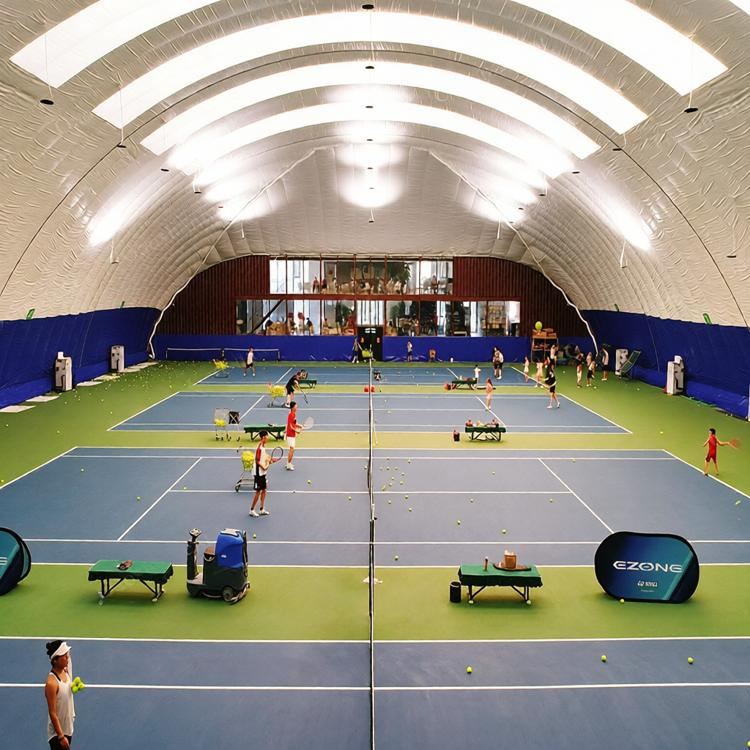
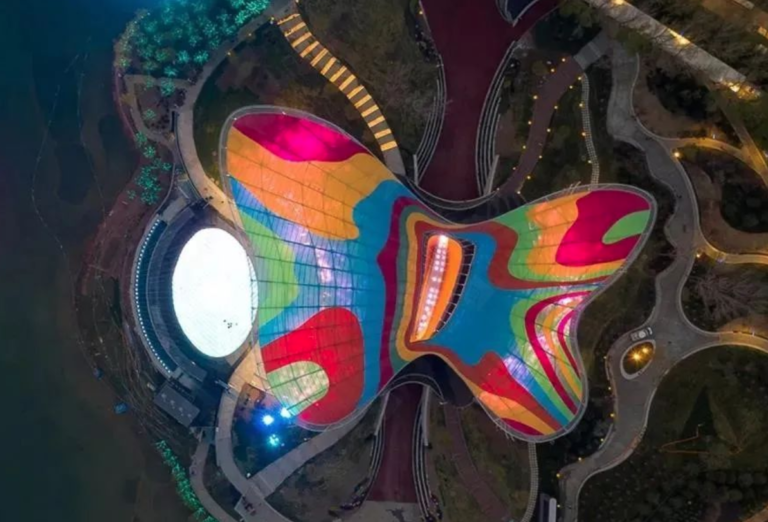
In terms of material technology, the outer shell of an air-supported tennis court consists of a PVDF (polyvinylidene fluoride) coated membrane. This material is both lightweight and high-strength: it has a density only one-fifth that of steel, yet boasts a tensile strength exceeding 4000 N/5cm, enabling it to withstand Category 12 gale-force winds and heavy snow loads. The PVDF coating provides a self-cleaning property, allowing rainwater to wash away surface dust, while also blocking 99.9% of ultraviolet (UV) radiation, which helps protect the facilities inside. The light transmission of the membrane can be customized; during the day, the structure allows for natural daylighting, while at night, an internal LED system provides uniform illumination—resulting in energy consumption that is 30%–40% lower than that of traditional venues.
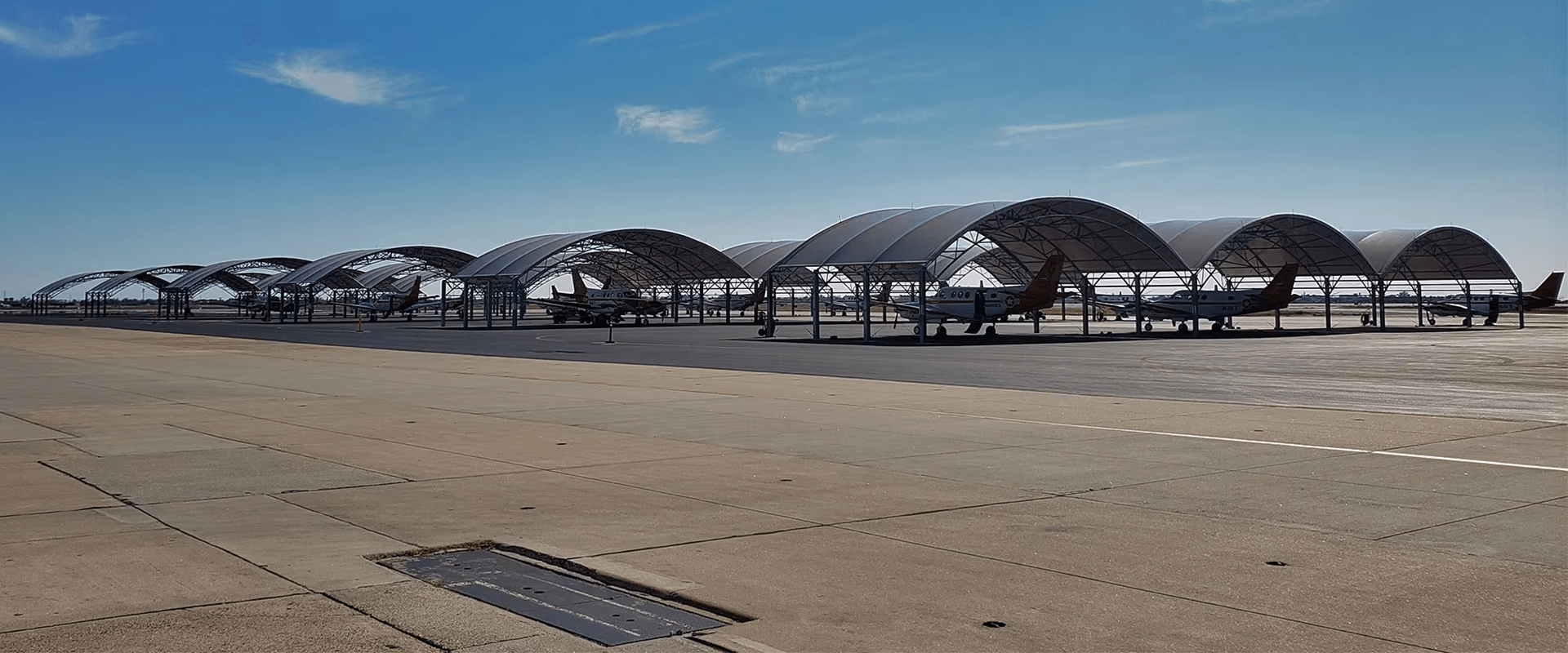
Regarding space utilization, the absence of any internal support columns is a key advantage of air-supported tennis courts. In traditional venues, support columns can occupy 5%–8% of the available space; in contrast, air-supported structures maintain their form through air pressure, offering an interior clear height of 12–25 meters. This provides ample space for suspending the lighting and sound equipment required for professional-level competitions. Furthermore, this design ensures that athletes’ movements are not obstructed by columns—a feature particularly beneficial for sports like tennis and badminton, which demand rapid, dynamic movement. Furthermore, the airtight nature of air-supported structures enables precise control over temperature and humidity. Through an intelligent control system, the interior environment can be maintained at a temperature of 15–25°C and a humidity level of 40%–60%, ensuring a comfortable setting for athletes.
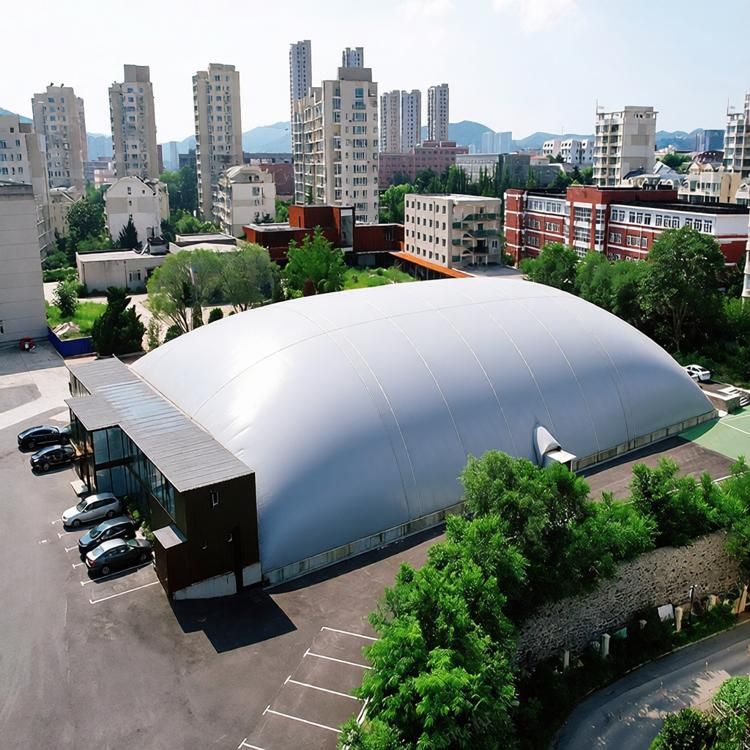
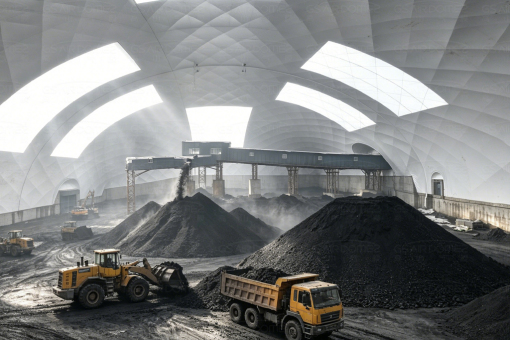
In terms of application, air-supported tennis courts have expanded beyond the realm of professional sports into diverse sectors, including warehousing and emergency response. In the sports sector, their modular design allows for rapid assembly and disassembly—for instance, one international tennis tournament saw an entire venue constructed in just 72 hours. In warehousing, air-supported structures serve as alternatives to traditional warehouses; with a service life of 20–30 years and high corrosion resistance, they offer significantly lower maintenance costs. In emergency scenarios, these structures can be quickly deployed as temporary medical stations or supply depots, with spans exceeding 100 meters, providing ample space for large-scale equipment. This versatility stems from the standardized design of air-supported technology, which allows for customized construction—ranging from small training facilities with a 20-meter span to comprehensive sports arenas with a 110-meter span—by adjusting air pressure and membrane material specifications.