Design Services
Innovative Applications of Membrane Structures in Curtain Wall
In the realm of modern architecture, membrane structures—characterized by their lightweight, aesthetic appeal, and versatility—have emerged as a new trend in curtain wall design. By transcending the limitations of traditional building materials and skillfully integrating aesthetics with functionality, they have injected fresh vitality into contemporary architecture. The Huizhou Olympic Sports Center stands as a prime example of the application of membrane-structured curtain walls; beyond its striking exterior, its innovative design concepts and technical execution showcase the immense potential of membrane structures for large-scale sports venues.
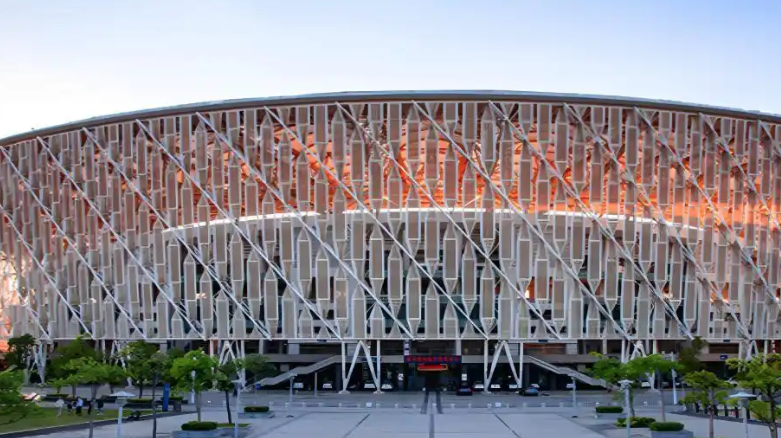
Serving as the main venue for the 13th Guangdong Provincial Games in 2010, the Huizhou Olympic Sports Center is a modern facility designed for competitions, training, and leisure. Its design draws inspiration from the traditional Hakka weiwu (enclosed residential compounds) and douli (conical bamboo hats) of the Lingnan region—symbolizing unity and harmony. The complex spans a building area of 66,000 square meters and can accommodate 40,000 spectators.
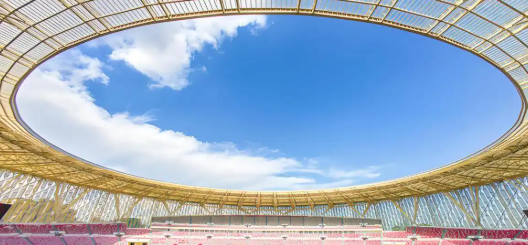
The curtain wall of the Huizhou Olympic Sports Center innovatively utilizes a PTFE mesh membrane—a lightweight, high-strength fluoropolymer known for its excellent light transmission and self-cleaning properties. This material not only creates a unique visual effect but also facilitates natural daylighting and ventilation, ensuring a comfortable and bright environment for both spectators and athletes.
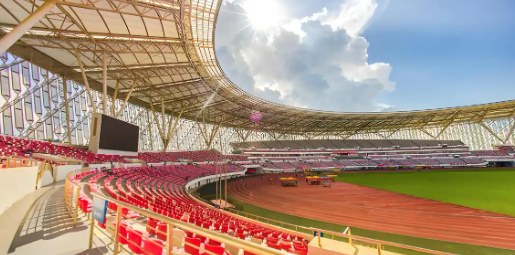
In terms of specific design, the curtain wall is composed of modular units—divided into 44 vertical sections—secured by aluminum alloy strips. Each unit is equipped with integrated LED lighting, producing dynamic visual displays at night.
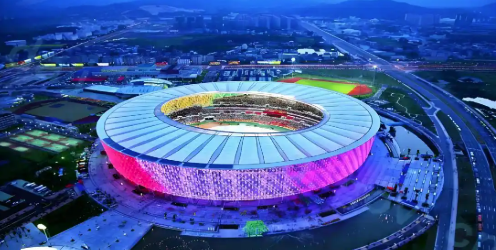
Furthermore, the membrane structure design of the Huizhou Olympic Sports Center takes local climatic conditions into account. In the hot and humid climate of Southern China, traditional metal-panel or glass curtain walls can often create enclosed spaces, resulting in poor natural lighting and ventilation. The use of the PTFE mesh membrane offers an ingenious solution to these challenges. By adjusting the density and angle of the grid, the designers achieved precise control over light and ventilation. This ensures the stadium remains cool and comfortable while effectively reducing energy consumption—a key step toward achieving green, energy-efficient goals.
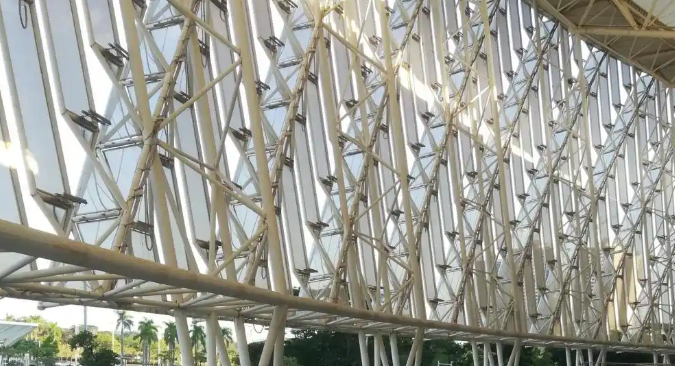
Furthermore, the membrane structure design of the Huizhou Olympic Sports Center’s curtain wall excels in its attention to detail. The use of bolted connections ensures structural stability while facilitating future maintenance and replacement. Additionally, the durability and aging resistance of the membrane material were carefully considered, guaranteeing that the curtain wall retains its aesthetic appeal and functionality over the long term.
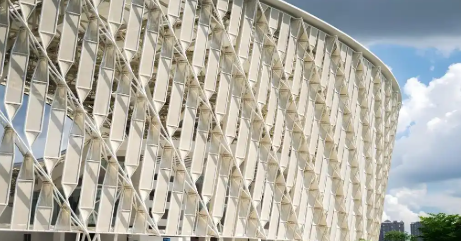
The innovative application of a membrane structure in the curtain wall design of the Huizhou Olympic Sports Center not only achieves a perfect blend of beauty and utility but also embodies advanced modern architectural concepts regarding sustainability and meticulous detailing. This project serves as a valuable reference for the design of other large-scale sports venues and paves the way for the future development of membrane structures in curtain wall applications.
If you are interested in architecture featuring membrane structure curtain walls, please leave a comment or send us a private message—let’s explore the charm and possibilities of architectural design together.