Design Services


Why Air Domes Are Ideal for Flower Trading Markets
Flower trading markets have specific requirements regarding their environment and operational efficiency. Fresh flowers are sensitive to heat and direct sunlight; high temperatures cause petals to wilt, while intense light leads to the fading of their colors. Trading typically begins in the early hours of the morning, with growers and buyers conducting inspections, price negotiations, and loading operations indoors. Traditional trading venues—often steel-frame sheds or open-air sites—tend to be stiflingly hot in the summer and freezing in the winter, resulting in significant flower spoilage. In recent years, air-supported structures (air domes) have emerged as an effective solution for this sector, offering excellent thermal insulation, natural lighting, expansive interior space, and the ability to be deployed rapidly.
I. What Are the Requirements for a Flower Trading Market?
Flower trading requires a large, open space. Fresh-cut flowers, potted plants, and ornamental greenery must be organized into distinct zones; stalls for growers and pathways for buyers must be kept separate; and there must be dedicated areas for trucks to park and load. The interior should be free of columns, as these would obstruct stall layouts and the movement of vehicles.
Environmental control is essential. The ideal temperature for flower trading is between 15°C and 25°C; higher temperatures accelerate blooming and shorten the flowers’ lifespan. Facilities must provide cooling in the summer and insulation in the winter. Lighting should be soft, as direct sunlight accelerates wilting and color fading. Furthermore, the market requires effective ventilation, as the presence of many people and the respiration of the flowers generate moisture and carbon dioxide.
The flooring must be waterproof and easy to clean. Because flowers require regular misting to stay fresh, the floor is frequently wet, necessitating efficient drainage. Additionally, the floor must be washed down daily after trading concludes, requiring materials that are highly water-resistant.
II. How Do Air-Supported Structures Meet the Needs of Flower Trading Markets?
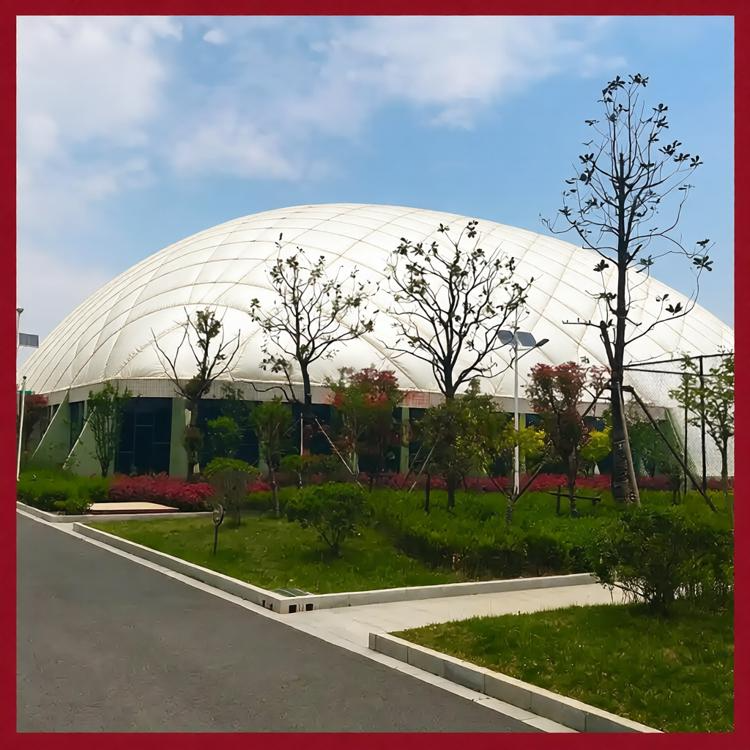
Air-supported structures offer large spans with completely column-free interiors. This allows stalls to be organized by flower category, while ensuring that buyer pathways and loading zones remain unobstructed by structural supports. The fully enclosed structure, combined with ventilation and cooling systems, allows for temperature control—keeping the interior cool in the summer and insulated in the winter—which helps reduce flower spoilage. The membrane material offers excellent light transmission, diffusing sunlight into a soft, indirect glow that is ideal for displaying flowers. The ground is paved and equipped with drainage, facilitating both the misting of flowers for freshness and the washing of the floor. The air-supported structure can be partitioned into distinct zones—such as trading areas, loading zones, and service areas—ensuring a clear and efficient flow of movement. Furthermore, the rapid construction process allows for completion well before the peak flower-trading season.
III. How do air-supported flower markets differ from traditional markets?
Traditional steel-structure greenhouses or open-air markets tend to be stiflingly hot in the summer and freezing in the winter, leading to significant flower spoilage. In contrast, air-supported markets provide thermal insulation and temperature control, ensuring better quality for the flowers. Traditional markets often feature internal support columns, which restrict the layout of stalls and walkways; air-supported markets, however, offer large, column-free spaces, allowing for much more flexible stall arrangements. While traditional markets require long construction periods and high capital investment, air-supported markets can be built quickly and at a relatively lower cost. Furthermore, unlike traditional permanent structures that cannot be relocated, air-supported markets can be dismantled and moved, allowing the entire facility to be relocated if the trading site needs to change. Finally, while traditional markets may be prone to leaks during the rainy season, the fully enclosed nature of an air-supported structure provides excellent protection against rain.
IV. For what types of settings are air-supported flower markets suitable?
Air-supported markets are well-suited for a variety of applications, including wholesale markets for fresh-cut flowers, potted plants, and ornamental greenery, as well as e-commerce sorting centers and regional distribution hubs for floral products. For operators of flower markets who need to maintain specific temperatures, require the flexibility to relocate, or aim to minimize flower spoilage, air-supported structures offer a more adaptable solution than traditional market facilities.