Design Services


How Breathable HDPE Shade Mesh Cools Architectural Spaces
How long have you spent in a sealed room? After 30 minutes, you begin to feel stuffy. After an hour, a headache sets in. By the two-hour mark, you become irritable, your ability to concentrate wanes, and you may even feel nauseous. These are signs that carbon dioxide levels have become too high—the building itself is crying out for help.

Traditional roofing materials—concrete, metal panels, and glass—create a sealed environment. They completely isolate the interior from the outdoors, preventing air circulation. To compensate, you are forced to rely on mechanical systems like air conditioning, fresh-air ventilation, and exhaust fans. These solutions are energy-intensive, complex to maintain, and yet, the air never quite feels fresh enough.

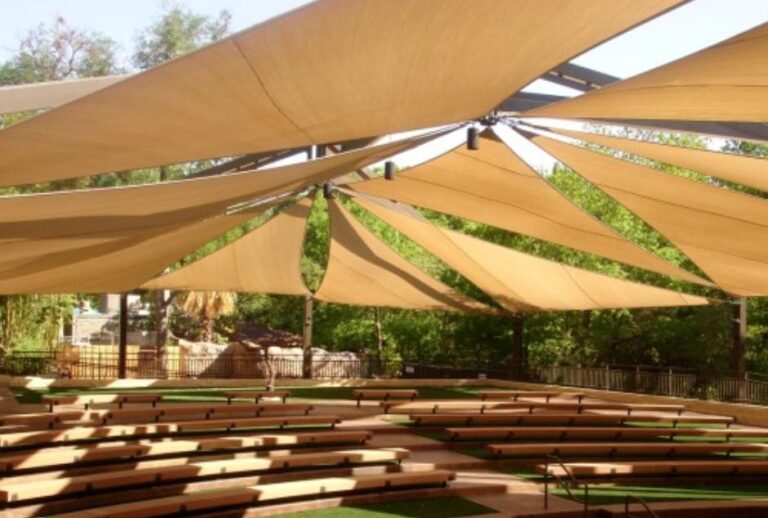
HDPE mesh membranes flip this logic on its head. With an open-area ratio typically ranging from 20% to 85%, the membrane itself functions as a massive vent. Air flows naturally through the material, allowing indoor and outdoor air pressure to balance automatically. There is no need for mechanical ventilation; the building breathes on its own.

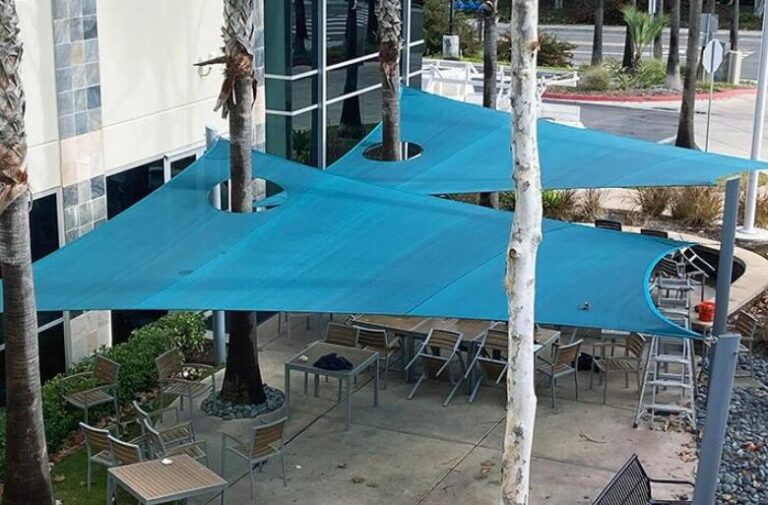
This is not a metaphor—it is a physical reality. The permeability of HDPE mesh membranes makes them a “breathing” architectural material. In outdoor dining areas in Dubai, temperatures beneath an HDPE membrane are 8–12°C lower than outside, yet the air remains crisp and fresh. As warm air rises and escapes through the openings in the membrane, cooler air is drawn in from below, creating a continuous micro-circulation. Sitting beneath the membrane feels like resting in the shade of a tree—only cooler and better ventilated.

At a school playground in Shenzhen, carbon dioxide levels under an HDPE membrane were found to be 40% lower than those inside an indoor gymnasium. Students attending physical education classes under the membrane reported feeling less stuffy and fatigued, with a 15% improvement in athletic performance. There is no need for teachers to open windows or turn on fans; the membrane provides its own ventilation.

In a community garden in Sydney, plants grown under an HDPE membrane developed 20% faster than those in the open air. Because the material provides both shade and ventilation, the plants are protected from overheating while avoiding water stress. Gardeners don’t need to provide extra irrigation or install additional shade netting—the membrane itself creates the perfect microclimate.

Breathability is, at its core, a dialogue between architecture and nature. An airtight building is like a box that traps its occupants; a breathable building, by contrast, invites them back into the embrace of nature. For an HDPE mesh membrane, breathability is not merely a technical specification—it is a metric for well-being. It allows your skin to sense the movement of the breeze, your lungs to draw in fresh air, and your body to perceive shifts in temperature.

Such sensory experiences cannot be replicated by mechanical ventilation. You might use air conditioning to lower the temperature to 22°C, but it cannot recreate the gentle caress of a light breeze. You might employ a mechanical ventilation system to reduce carbon dioxide levels to 400 ppm, yet it cannot emulate the rhythmic, organic flow of air.

The breathability of an HDPE membrane imbues a structure with a sense of “vitality.” It ceases to be a cold, inert container and becomes a living, breathing space. Breathability offers another, less obvious benefit: humidity regulation. In the humid south, the space beneath an HDPE membrane remains free from stifling dampness, as air circulation carries away excess moisture. In the arid north, the space avoids becoming parched, as natural ventilation introduces air with a more comfortable moisture balance.

This is architecture that breathes, providing the human body with an optimally comfortable humidity environment. The next time you step into a space defined by a membrane structure, look beyond its form and color. Pay attention to the air: Is it stuffy or refreshing? Is it stagnant or in motion? Does it feel mechanical, or does it feel natural?