Design Services
How Open-Mesh HDPE Fabrics Reduce Wind Uplift Forces
The greatest adversary to outdoor tensioned shading structures is not degradation from sun exposure, but rather the persistent, fluctuating force of wind. Much of the damage seen in outdoor awnings—such as tears, deformation of steel frames, or the failure of anchor points—stems from wind-induced vibration.

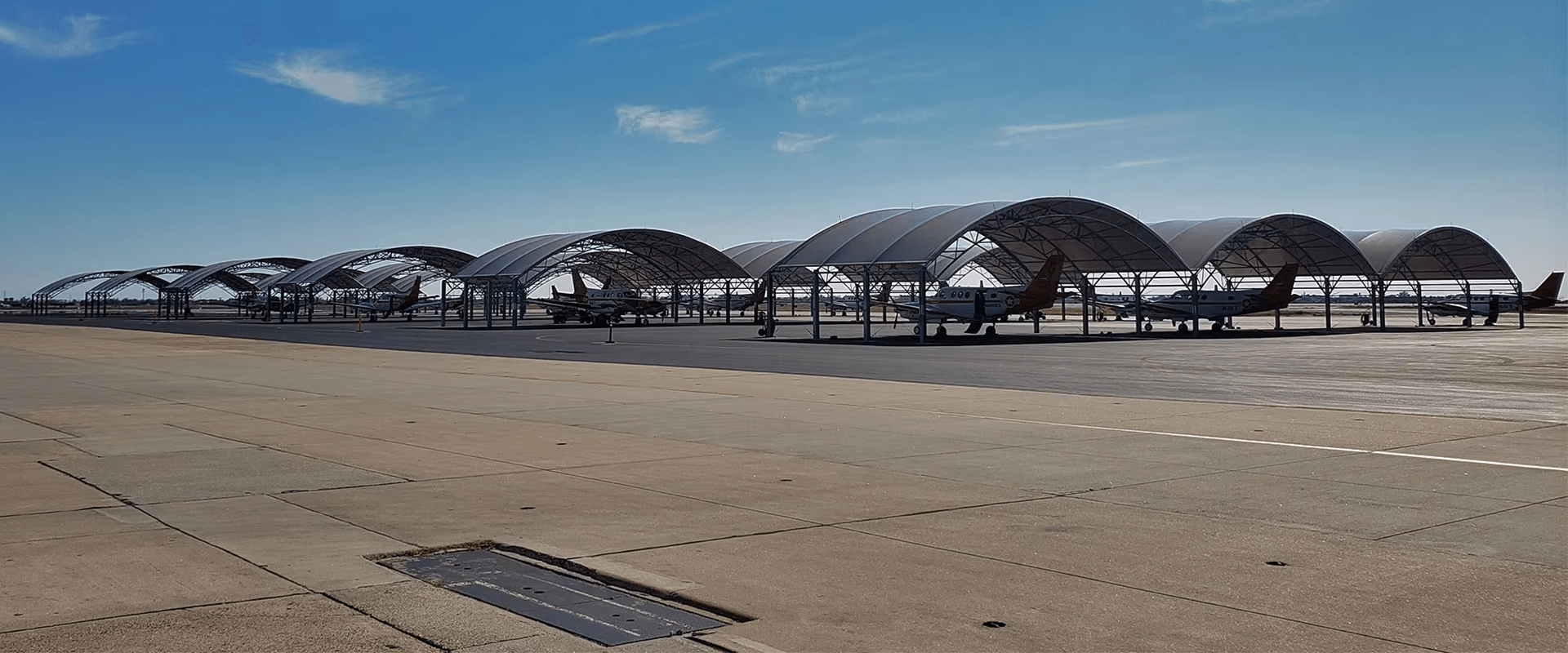
Compared to solid, impermeable membranes or rigid panels, the open-weave structure of HDPE (high-density polyethylene) mesh membranes is inherently better suited to handle wind loads. When integrated with professional wind engineering, these systems can effectively withstand high-wind conditions—such as those found in coastal areas, open plazas, or elevated sites—significantly enhancing the safety and stability of outdoor shading installations.

When wind strikes an impermeable shading structure, the airflow cannot pass through; consequently, the full force of the wind is exerted directly onto the membrane and its steel framework. In high winds, this can cause the membrane to bulge or stretch, while long-term fatigue from wind-induced vibration may lead to cracked welds or loosened anchor points.

In contrast, the porous, open-weave structure of HDPE mesh allows most of the airflow to pass directly through the material. This effectively dissipates wind pressure, reducing the load on the structure at its very source.

This air-permeable characteristic is more than just a material advantage—it is a cornerstone of wind engineering design. It enables large-span, expansive shading canopies to remain structurally stable without the need for heavy, cumbersome steel support frameworks.

In regions prone to strong winds or typhoons, the mechanical advantages of mesh membranes become even more pronounced. The evenly distributed apertures break up turbulent airflow, preventing the concentration of wind pressure in specific areas and minimizing fatigue damage caused by the fluttering or flapping of the membrane.

Furthermore, the use of industrial-grade, high-toughness weaving techniques ensures balanced tension across both the warp and weft directions, providing excellent tear resistance against the repeated stretching and deformation that occur during high-wind events. Additionally, because mesh membranes experience significantly less vibration than solid materials, they generate less wind noise—preventing the persistent, disruptive flapping sounds often associated with high winds and creating a more comfortable environment for users.

The essence of wind engineering design lies in optimizing the tensioning logic to suit the specific wind environment of a given site. For open, unobstructed spaces—such as municipal plazas, waterfront promenades, and elevated sports grounds—ventilation efficiency is optimized by precisely adjusting the shading ratio of the mesh, the curvature of the membrane surface, and the level of pre-tension.

By integrating lightweight, hot-dip galvanized steel structures with reinforced edge detailing, a robust wind-resistant system—comprising a “permeable membrane surface” and a “stable framework”—is created. This design preserves a light, airy aesthetic while effectively eliminating safety risks during high-wind conditions.

A truly durable outdoor shading structure does not rely on rigid resistance against the elements; rather, it dissipates external natural forces. Leveraging the inherent permeability of its open-mesh HDPE membrane—complemented by specialized wind-engineering design—this system achieves a perfect balance between a lightweight form and safety in high-wind environments. This ensures long-term, reliable performance for outdoor shading installations across a wide range of complex site conditions.