Design Services


Do air-supported sports venues consume a lot of electricity?
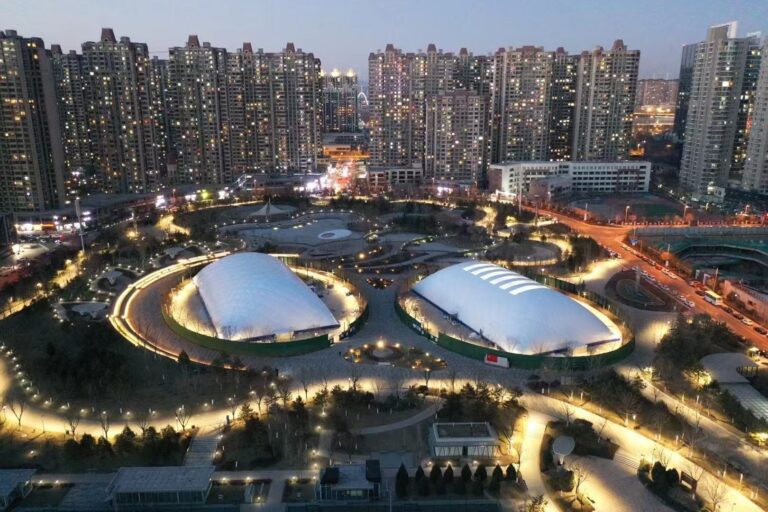
With the rapid growth of national fitness initiatives and the sports industry, various types of sports venues are springing up everywhere. Air-supported (or “air-dome”) sports venues, distinguished by their unique structure and numerous advantages, are increasingly gaining public attention. However, many people have concerns regarding their power consumption—a factor directly linked to operational costs and sustainability.
So, do air-supported sports venues consume a significant amount of electricity? Xinyuan Air-Supported Structures (Xinyuan Air-Dome) breaks this down for you by examining three key aspects.
Fan Equipment
Air-supported venues require fan systems to maintain internal air pressure—a defining feature that sets them apart from traditional buildings. The operating status of these fans directly influences power consumption. Taking a typical 2,000-square-meter air-supported venue as an example, it is generally equipped with two 5.5 kW fans. During normal operation, these fans do not run at full capacity; instead, they operate at approximately 30% of their rated power. Based on this, a single fan running 24 hours a day consumes about 40 kWh (5.5 kW × 30% × 24h). With two fans, the daily consumption is approximately 80 kWh, totaling about 2,400 kWh per month (based on a 30-day month). Furthermore, once the internal and external air pressure stabilizes at the set value—and provided there are no significant changes in the external environment—the fans can even be shut down for short periods, further reducing actual energy consumption. Compared to the continuous operation of ventilation systems in traditional buildings, the energy management of fans in air-supported venues offers a distinct advantage.
Lighting Systems
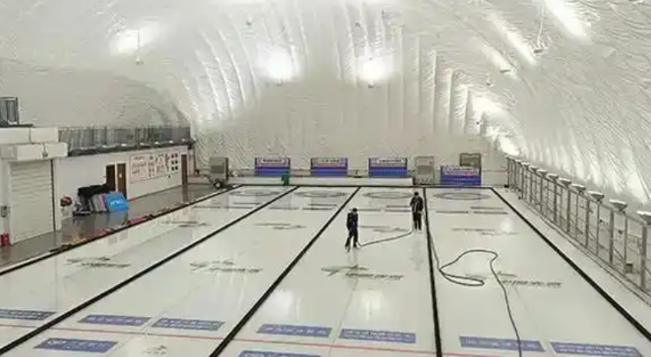
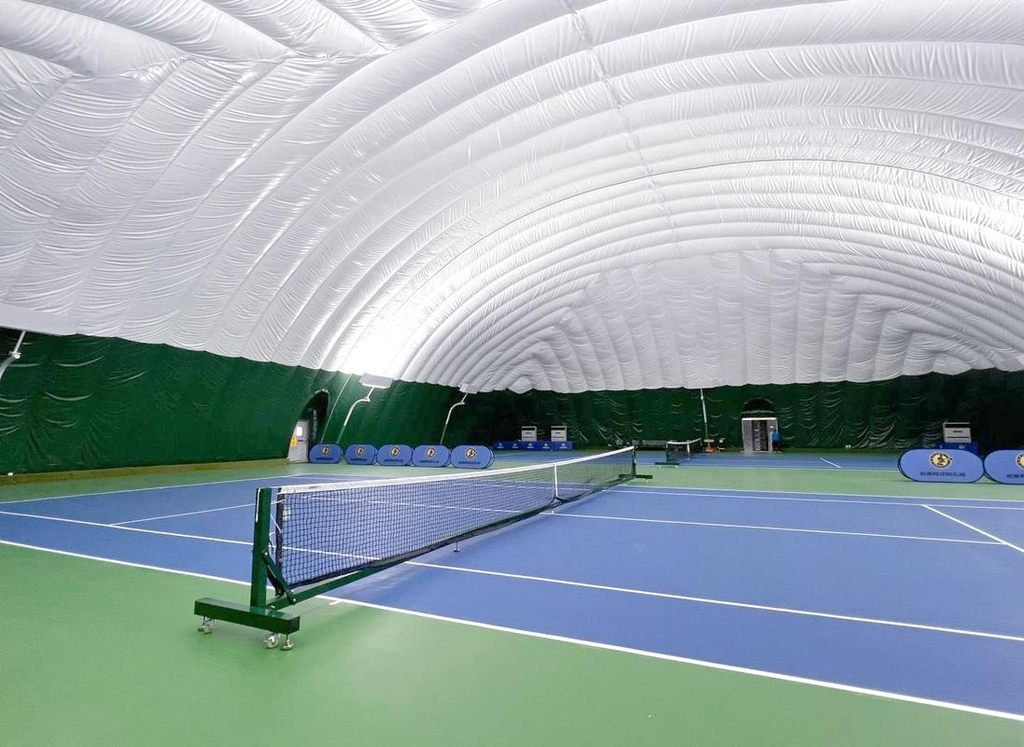
Lighting also accounts for a significant portion of a sports venue’s electricity consumption. Air-supported venues often feature translucent membrane sections on the roof, which provide excellent natural daylighting. During the day, sunlight filters through the membrane, creating a soft, diffused light that illuminates the interior, largely eliminating the need for artificial lighting. Artificial lighting systems are only required when natural light is insufficient, such as at night or during overcast weather. Taking a 2,000-square-meter air-supported sports dome as an example, if it is equipped with LED lighting totaling 10 kW and the lights are used for 5 hours a day, the daily energy consumption for lighting would be 10 kW × 5 h = 50 kWh, amounting to approximately 1,500 kWh per month. In contrast, traditional sports venues—even those with windows—often suffer from poor natural lighting due to their structural design and spatial layout, necessitating longer periods of artificial lighting and resulting in significantly higher energy consumption than air-supported domes.
Air Conditioning Systems
Energy consumption for air conditioning is influenced by various factors, including building area, the temperature differential between the interior and exterior, and the thermal insulation properties of the membrane material. Air-supported sports domes excel in thermal insulation. On one hand, the membrane materials typically feature high thermal reflectivity and heat dissipation rates, along with low thermal conductivity, which effectively blocks external heat from entering or internal heat from escaping. On the other hand, most air-supported domes utilize a double-layer membrane structure with an insulation layer between the outer and inner membranes, further enhancing thermal performance. Based on empirical data, an air-supported dome consumes approximately 0.21 kWh per square meter per hour (though this figure may fluctuate depending on specific conditions). For a 2,000-square-meter dome, this translates to an hourly air conditioning energy consumption of approximately 2,000 × 0.21 = 420 kWh. In actual operation, however, intelligent control systems can be used to adjust the power and runtime of the air conditioning based on factors such as indoor/outdoor temperatures and the number of occupants, thereby reducing energy consumption.
Overall, air-supported sports domes demonstrate excellent energy efficiency across major power-consuming components, including ventilation fans, lighting, and air conditioning systems. While actual electricity consumption will vary based on factors such as the size of the facility, frequency of use, and local climate, air-supported domes—thanks to high-efficiency materials, intelligent control technologies, effective natural lighting, and well-planned modular equipment—achieve a high level of energy efficiency. They offer clear advantages in energy conservation and are far from being the “energy guzzlers” some might imagine. As technology continues to advance, the energy efficiency of air-supported sports facilities is expected to improve further, offering a more eco-friendly and sustainable venue option for the development of sports.