Design Services
Guide to Building Sunshade Tensile Membrane Structures
I. Overview
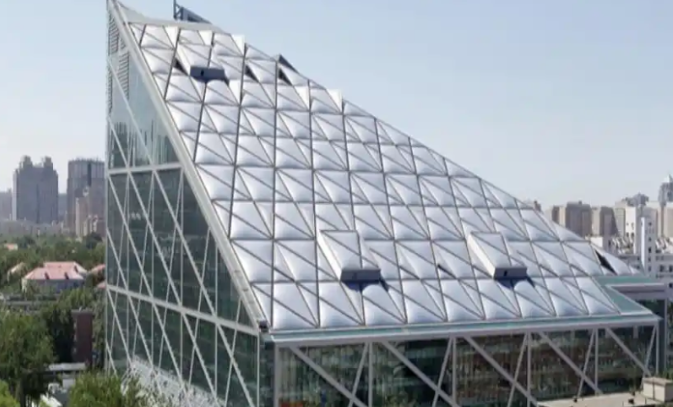
Architectural tensioned membrane shading structures (tensioned membrane shading systems for building facades) are flexible, tensioned shading systems attached to a building’s main structure. They consist of high-strength membrane materials, steel support components, prestressed cables, and embedded anchors, which are tensioned to create a stable, curved surface. Unlike freestanding canopy structures, these systems are directly connected to a building’s walls, beams, or columns. Their primary function is external shading, while also serving an aesthetic, decorative purpose. They are widely used on the facades of office buildings, commercial complexes, public facilities, and hotels, as well as over windows, doors, terraces, and entrances.

II. Core Functions
- Thermal Insulation and Energy Efficiency: By blocking radiant heat before it reaches glass curtain walls or windows, these systems significantly reduce air conditioning energy consumption and minimize interior glare, serving as a highly efficient external shading solution.
- Shading and Light Control: They filter intense sunlight, preventing excessive exposure indoors. The membrane surface casts dynamic, curved shadows and light patterns onto the building facade, enhancing its visual appeal.
- Rain Protection: When installed over entrances or terraces, they can function as canopies, providing protection for doors, windows, and exterior walls.
- Lightweight: The membrane material is extremely lightweight, imposing minimal additional load on the existing building structure, making it suitable for renovation projects as well.

III. Common Membrane Material Selections
- PVDF-coated Polyester Membrane (Industry Standard): Features UV resistance and a self-cleaning surface (dust is removed by rainwater). It has a service life of 12–18 years, offers excellent cost-effectiveness, and is the choice for the vast majority of public building projects.
- PTFE-coated Fiberglass Membrane: Offers Class A fire resistance and exceptional durability against aging, with a service life exceeding 25 years. While higher in cost, it is frequently used for landmark buildings.
- PVC Membrane: Low cost, but with limited weather resistance; typically used for temporary projects. IV. Structural Characteristics

- Anchored to the existing building structure; various fixation methods can be employed, including cantilevered columns, cable-stayed systems, or embedded components within walls.
- Flexible design options: can be configured as continuous curved surfaces, segmented membrane strips, or wave-like forms.
- Steel components and membrane panels are prefabricated in the factory and rapidly assembled on-site, ensuring a short construction cycle.
V. Typical Applications
External shading for glass curtain walls, terraces of office buildings, main entrance canopies, outdoor walkways for commercial buildings, and exterior window shading for hotels.

VI. Advantages & Limitations
✅ Advantages
- External shading provides superior thermal insulation compared to internal shading.
- Elegant, fluid forms enhance the building’s aesthetic appeal.
- Lightweight, making it ideal for renovation projects.
- Self-cleaning properties, requiring minimal long-term maintenance.

⚠️ Limitations
- Requires periodic inspection of cables and anchor fastenings.
- Projects in high-wind areas necessitate specialized structural analysis.
- Membrane materials have a finite service life and will eventually require replacement.
If you are interested in membrane structures for building shading—or in pneumatic (inflatable) membrane structures—please feel free to send a direct message or call us. Zhongke Membrane Structure looks forward to discussing potential solutions with you.