Design Services
How Tensile Structures Create Iconic Glamping Landmarks
Have you noticed that lately, while scrolling through short-form videos or your social media feed, you keep coming across striking, eye-catching rooftops? You know the ones—structures with fluid, sleek lines that look like something out of a futuristic space capsule. In places like campsites and cultural/creative parks, in particular, there’s a recurring theme: they’re all using the same material—membrane structures!
Is it a coincidence, or a growing trend? The truth is, campsites and creative parks are all jumping on the bandwagon! How do membrane-structure roofs become “viral, must-visit” landmarks? In this article, we’ll peel back the curtain on these “Instagrammable” rooftops—exploring them through the lenses of aesthetics, structural engineering, marketing, and practicality—to provide you with a comprehensive guide and inspiration for creating the next big, buzz-worthy roof!
I. From Tents to Rooftops: A Design Revolution in Camping Culture
If you still think camping is just about pitching a tent and lighting a campfire, you’re seriously behind the times!
Modern campsites have made a major leap from “roughing it in the wild” to “curated, sophisticated experiences”—and membrane-structure roofs are a key component of this design revolution.
Why are campsites flocking to membrane structures?
Lightweight yet stable: The materials are light and easy to assemble, yet robust enough to withstand wind and snow—perfect for all four seasons.
Visual impact: With a futuristic, otherworldly aesthetic, they’re practically begging visitors to snap photos and share them for days on end!
Versatile forms: Whether it’s undulating waves, soaring bird-like shapes, or celestial domes, these structures can handle it all with ease.
Eco-friendly and durable: Materials like PTFE and ETFE are long-lasting, sun-resistant, low-carbon, and energy-efficient—a true hallmark of sustainability!
In short: Membrane structures are the ultimate combination of style and substance for camping rooftops!
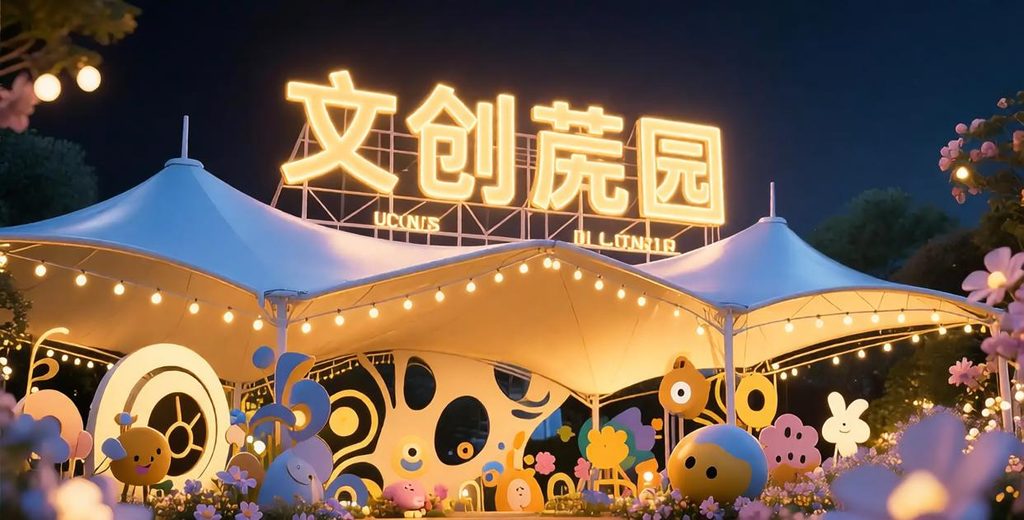
II. The “Roof Monetization” Strategy for Cultural & Creative Parks: Aesthetics + IP + Viral Potential
When you walk into a cultural or creative park, what’s the first thing that catches your eye? It’s not the signage or the paving—it’s the roof! You might not realize it, but a roof capable of “going viral” can quietly influence how long visitors stay, how often they share their experience, and even directly determine the commercial value of an entire complex.
Why are cultural and creative parks increasingly adopting “membrane structures”?
Creating a visual focal point: A soaring, arched roof serves as an unmistakable “anchor” for visitors to stop and take photos.
A canvas for IP collaborations: From “Minion” domes to Star Trek-themed roofs, membrane structures are the ideal medium for bringing intellectual properties to life.
Facilitating interactive audiovisual experiences: The surface of a membrane acts as a perfect projection screen—with shifting light and shadow, it can transform into a stage in an instant.
Expanding multifunctional space: Beyond just a roof, it can evolve into a café, a bookstore, or a performance venue!
It’s no mere slogan—the trend of adopting membrane-structured roofs in campsites and cultural parks represents a comprehensive evolution in design.
III. Five Key Drivers Behind the Popularity of Membrane-Structured Roofs
Seeing is believing, but it also takes a bit of imagination. Let’s unlock the five core secrets behind these “viral” rooftop destinations:
Visual contrast: Blending modern membrane structures with traditional brick or tile creates a striking visual juxtaposition.
Multifunctional hybrid spaces: More than just shelter from the elements, these roofs serve as venues for exhibitions, markets, and open-air cinemas.
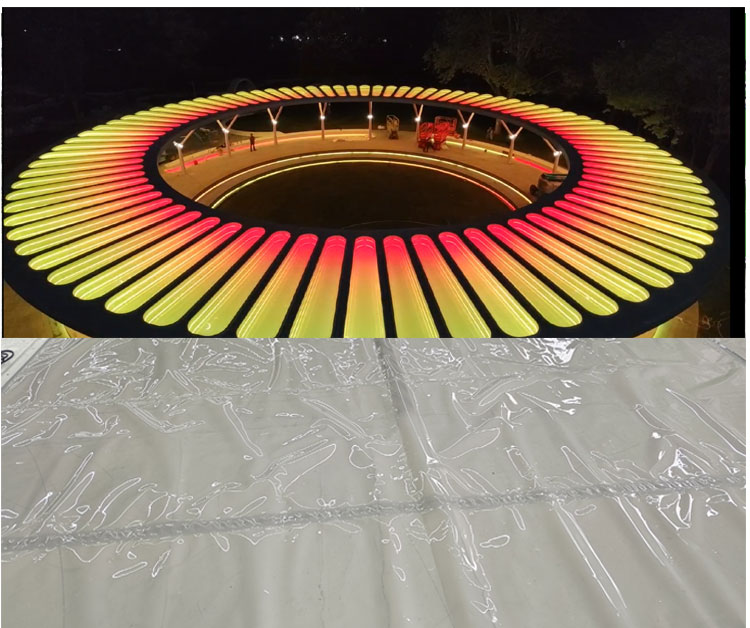
Creative light and shadow design: Translucent materials combined with lighting systems ensure the space remains vibrant and “buzz-worthy” even after dark.
Color and texture: Custom-colored membranes allow for the creation of a unique, brand-specific visual language.
Dynamic structural form: With curves that ripple like water, the structure feels full of movement—it’s practically begging to be photographed!
IV. A Five-Step Practical Guide to Creating Your Own Iconic Rooftop
Don’t just watch others go viral—you, too, can create your own “must-visit” membrane-structured rooftop. Just follow these 5 steps:
Step 1: Understand your audience’s preferences
Do young visitors lean toward a “cyberpunk” aesthetic? Opt for metallic-finish membrane materials. Do families prefer a “dreamy” aesthetic? Try a translucent, rainbow-hued membrane!
Step 2: Crafting the “Emotional Hook” for the Rooftop
Go beyond mere functionality—infuse it with emotion!
Think curves that embrace and tones that soothe.
Step 3: Integrating Experiential Scenes
Combine a café, a bookstore, rooftop loungers, and a projection screen—transform the roof into a living stage!
Step 4: Designing for Short-Video Sharing
Ensure every angle is “Instagrammable” (perfect for photos/videos)!
Create unique “check-in” spots to encourage user-generated content (UGC).
Step 5: Sustainable Maintenance
Manage waterproofing, sun protection, and cleaning schedules to keep the space looking fresh and photogenic.
V. Can Technical Design Have Soul? The Emotional Value of Membrane Structures
Think membrane structures are just functional designs with a bit of flair? Think again!
In today’s social-media-driven era, a rooftop is more than just a physical space—it’s an emotional one.
Where does this emotional value come from?
Narrative-driven space: Curved roofs create a gentle, reassuring atmosphere.
Tactile and luminous qualities: Semi-translucent materials evoke the feeling of being caressed by sunlight, stirring up cherished memories.
Imagination “beneath the sky”: Looking up at the roof serves as a bridge between nature and the soul.
VI. Frequently Asked Questions (FAQ)
Q1: Are membrane roofs suitable for cold northern climates?
Absolutely! Modern membrane materials offer excellent low-temperature resistance, and the structures can be professionally engineered to handle snow loads.
Q2: Is it expensive to build a roof like this?
Costs vary based on materials and surface area, but compared to traditional steel structures, membrane structures often offer better overall value and lower long-term maintenance costs—making them highly cost-effective.
Q3: Are membrane structures prone to aging?
High-quality membrane materials can last 15–30 years, and regular maintenance can further extend their lifespan.
Q4: How do you know if a membrane structure is “Instagrammable”?
A simple test: Take photos from five different angles—if every shot looks compelling, the design is a success! Stop underestimating the traffic-generating potential of a rooftop!
From campsites to cultural and creative parks, everyone is jumping on the trend—but how do you leverage a membrane structure to create an “Instagrammable” rooftop destination? It’s no longer a question of whether to use one, but how to choose the perfect design.
In an era where everyone is scrambling to chase trends, spark conversations, and capture attention, a membrane structure roof—striking the perfect balance between utility and visual splendor—serves as your ultimate “secret weapon” in the battle for foot traffic.
So, don’t hesitate any longer! Break free from the dull, conventional image of traditional roofing, “burst through the membrane” into a new era, and create a rooftop marvel all your own!