Design Services


Upgrading Campus Sports Spaces with HDPE Mesh Membranes
Outdoor campus sports facilities often face a practical dilemma: while there may be ample space for outdoor activities, the intense sun poses a significant challenge. Under the scorching sun, synthetic sports surfaces heat up rapidly, and direct ultraviolet (UV) exposure threatens the safety of students. Traditional enclosed roofs are not only costly to construct but can also lead to poor air circulation and obstructed sightlines.
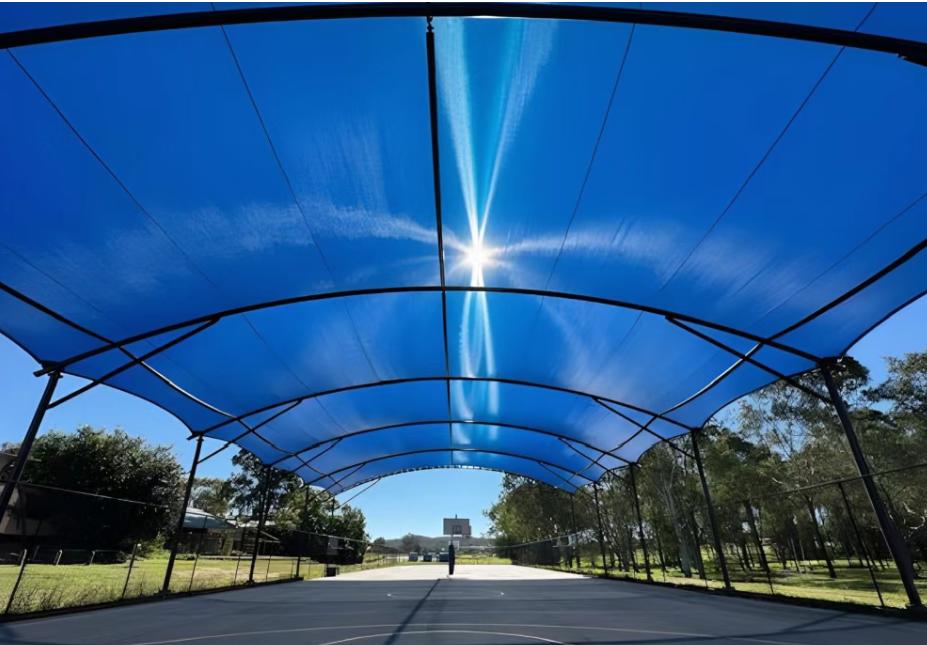
At Heshan College, located on the Gold Coast, the renovation of an outdoor sports court addressed these issues by installing a large-span HDPE (high-density polyethylene) mesh tensioned membrane. This creates a translucent blue canopy over the open court, offering a lightweight solution for campus athletic spaces.
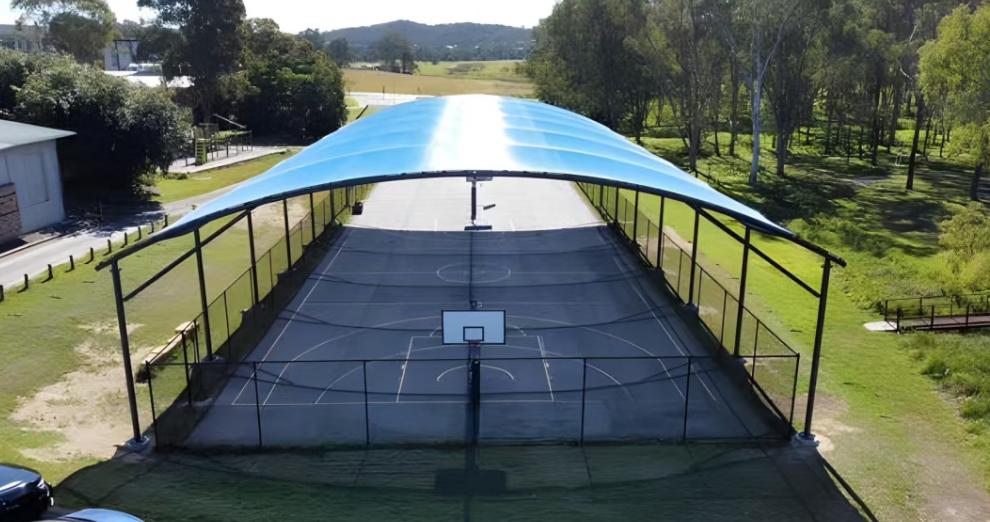
The court is used for basketball and various extracurricular sports. Surrounded by trees and situated in a coastal area prone to frequent gusts, the structure required high wind resistance. The large-span shading system is supported by hot-dip galvanized steel trusses, engineered and verified to withstand the variable wind conditions typical of a seaside environment.
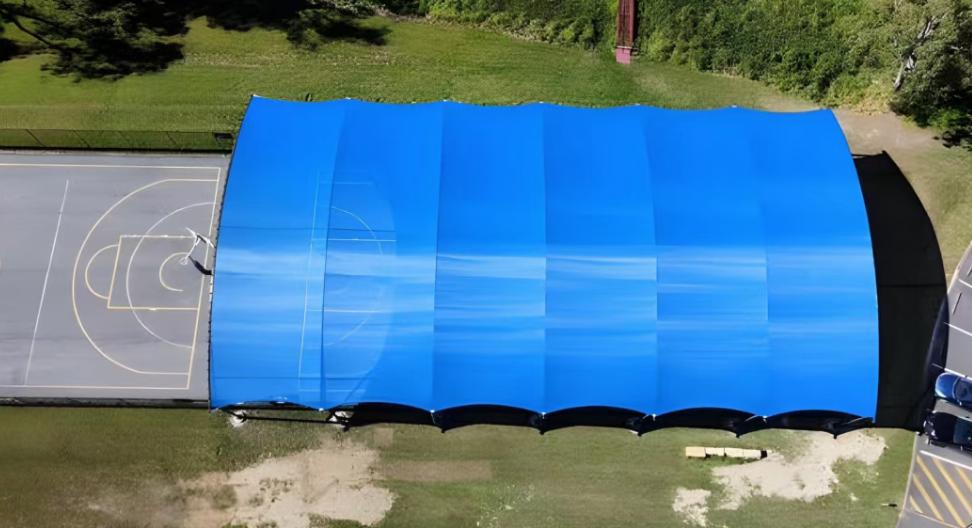
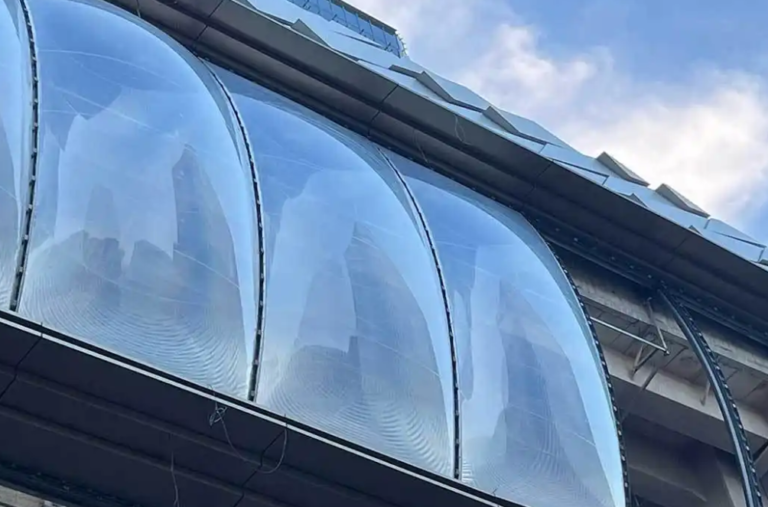
The expansive HDPE mesh membrane is precisely tensioned to form a series of undulating, arched surfaces that fully cover the sports area. The supporting columns are strategically positioned away from the primary activity zones, ensuring that the flow of movement—such as running, jumping, or competitive play—remains completely unobstructed.
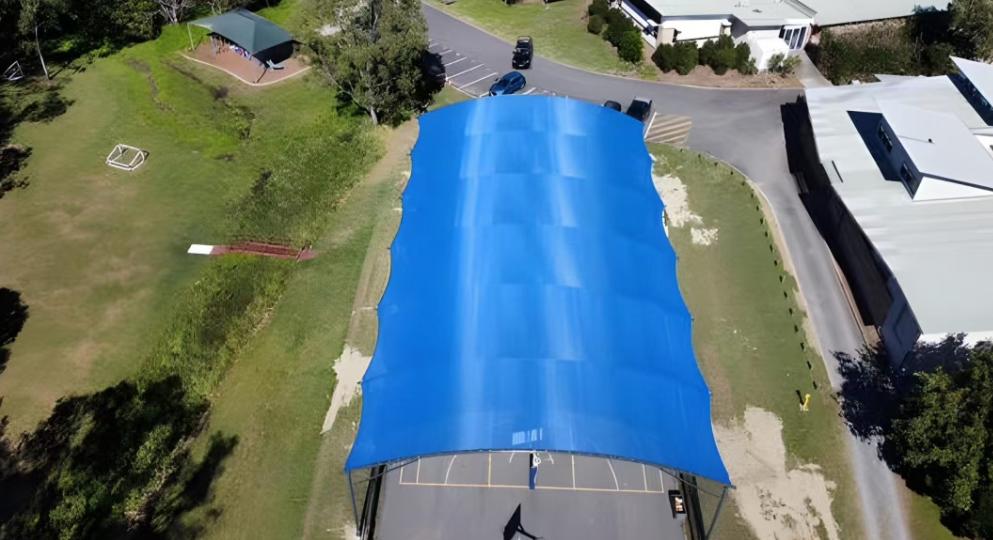
The open-weave, mesh-like structure of the HDPE material offers distinct advantages for sports environments. It blocks the vast majority of harmful UV rays and lowers the surface temperature of the court, protecting students during extended periods of outdoor activity. Unlike a solid, enclosed roof, the mesh allows sea breezes to pass through; this reduces the uplift force exerted on the structure by the wind and dissipates accumulated heat, preventing the space beneath from becoming a stifling, greenhouse-like environment.
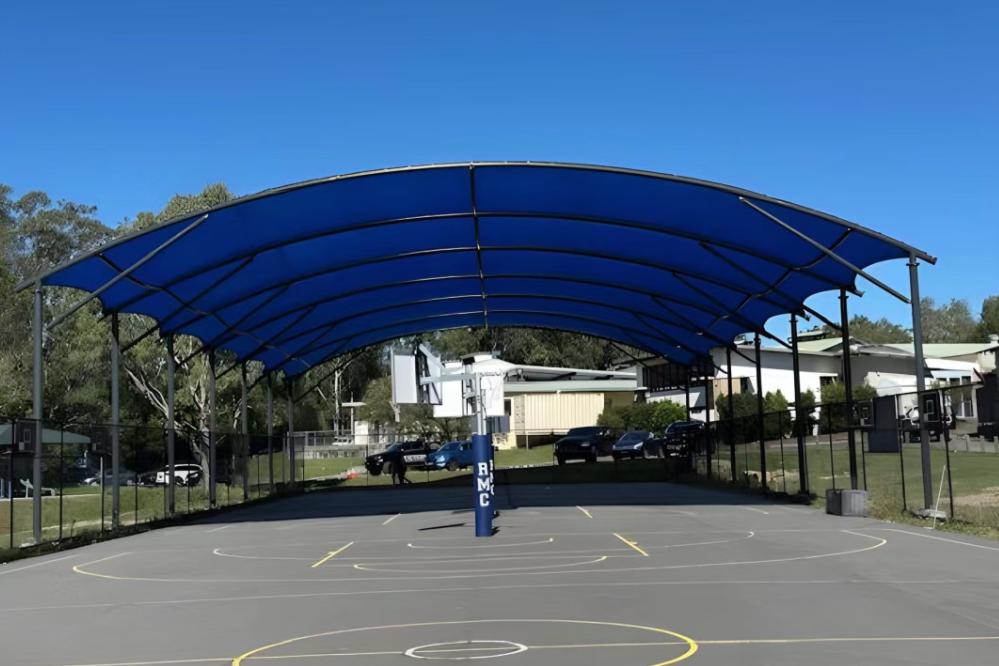
Rainwater can pass directly through the mesh, eliminating the need for complex drainage gutter systems and simplifying the overall construction design. The membrane material boasts excellent color fastness; it resists fading and degradation even when exposed to intense sunlight and humid, salt-laden air, making it well-suited for the high-frequency, continuous use typical of a school environment.
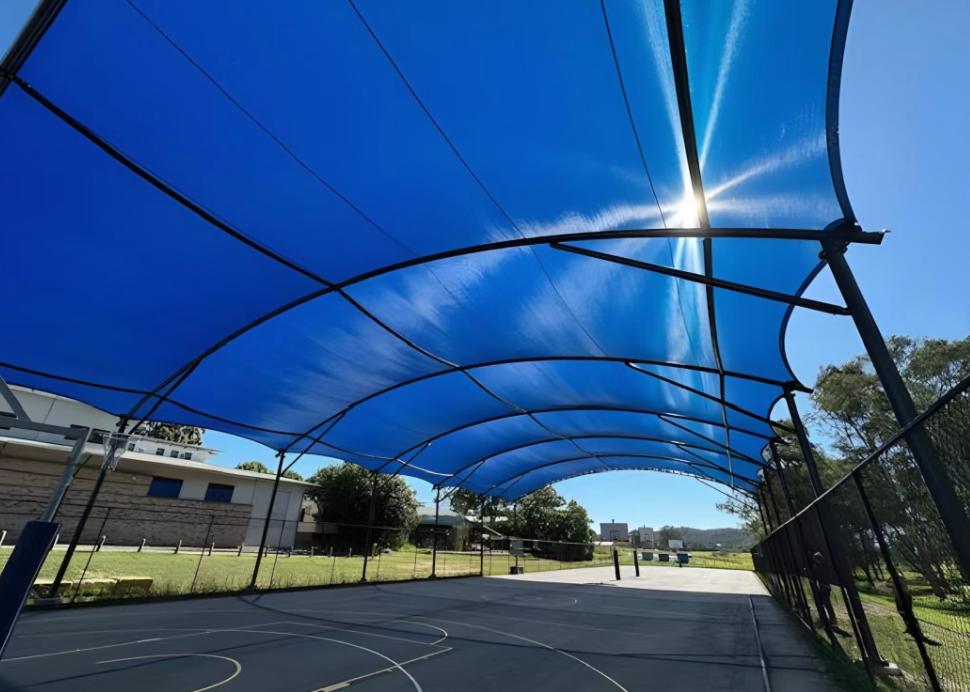
As light filters through the blue mesh membrane, it casts a soft, diffused glow across the court surface. Unlike rigid roofing, which often creates harsh glare, this system ensures clear visibility for students while they engage in sports. The shading installation was achieved through a lightweight, additive approach—avoiding the need for extensive demolition or reconstruction of the existing courts and fencing—which allowed for a short construction period and minimized disruption to the school’s academic and athletic schedules.
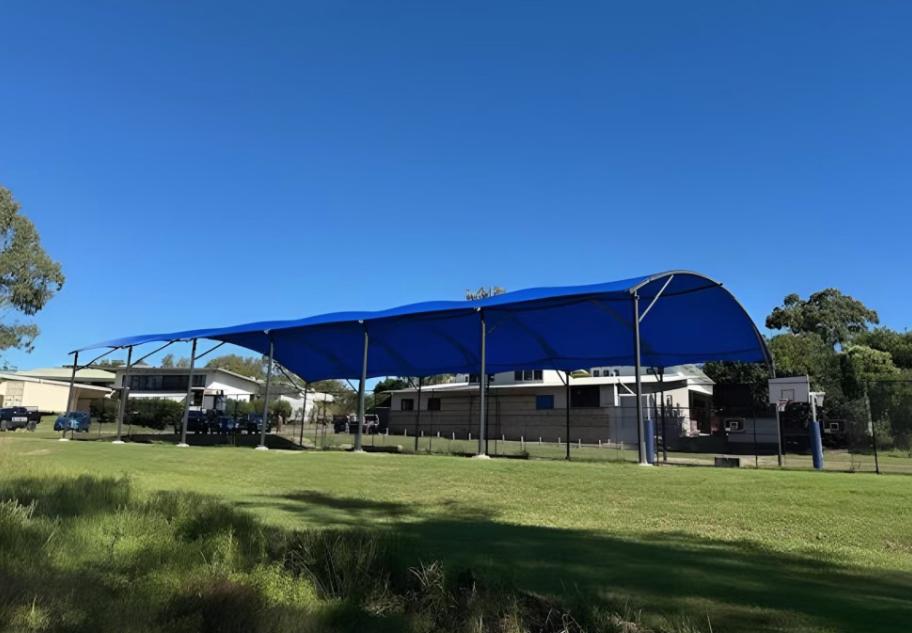
Many campus sports facility upgrades focus primarily on resurfacing or replacing equipment, often overlooking the microclimate created overhead. The project at Heshan Academy demonstrates that an HDPE mesh shading system is more than just a sun-protection cover; it effectively expands the functional boundaries of the space.
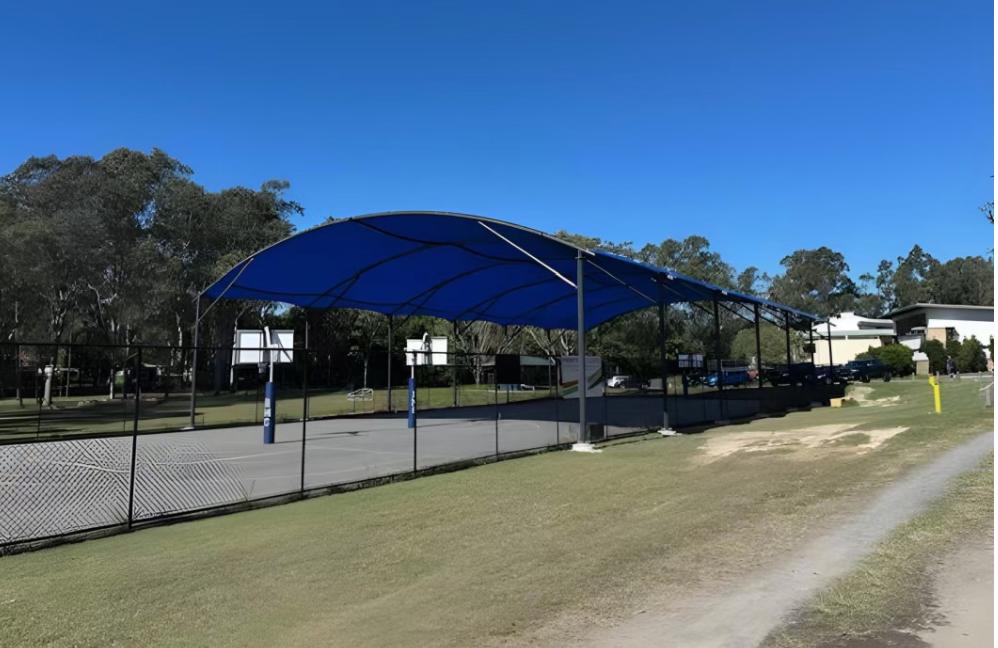
What was once an open-air court—often unusable during the midday sun—has been transformed into an all-weather sports space accessible for longer periods throughout the day. This flexible canopy system, which balances structural safety, ventilation, and cost-effectiveness, exemplifies a pragmatic approach to the renovation of public spaces on campus.