Design Services
Sail-Shaped Tensile Roofs for Coastal Commercial Hubs
As the sea breeze sweeps across the harbor, expansive, pristine white tensile membrane structures unfurl beneath the blue sky—resembling a fleet of white sails anchored along the shore, perfectly complementing the shimmering water and the yachts moored nearby. In this coastal outlet-style commercial town, these tensile membranes are more than mere sunshades; they serve as the spatial framework that stitches the entire district together. By weaving together sunlight, sea breezes, commerce, and the comfort of visitors, they have become a highly distinctive architectural landmark along the coast.
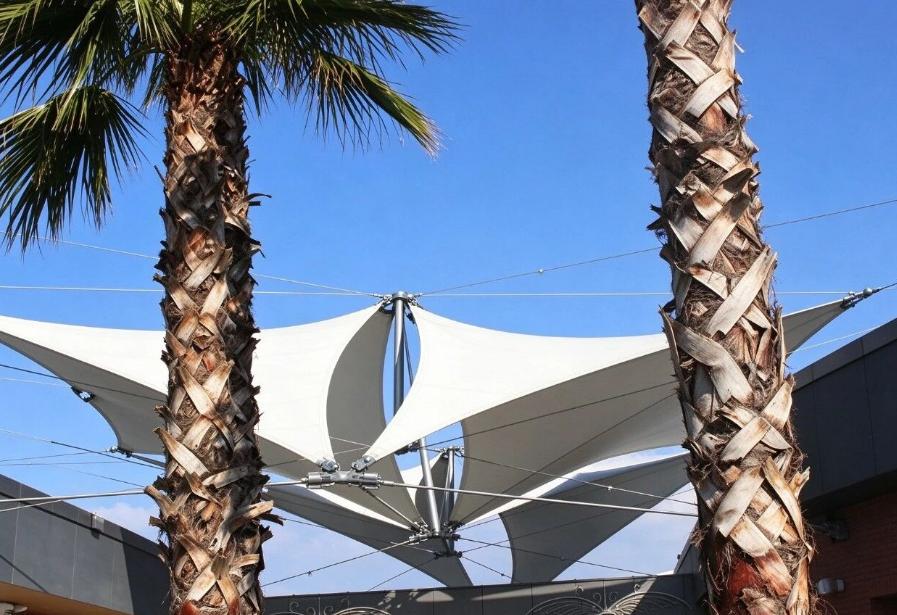
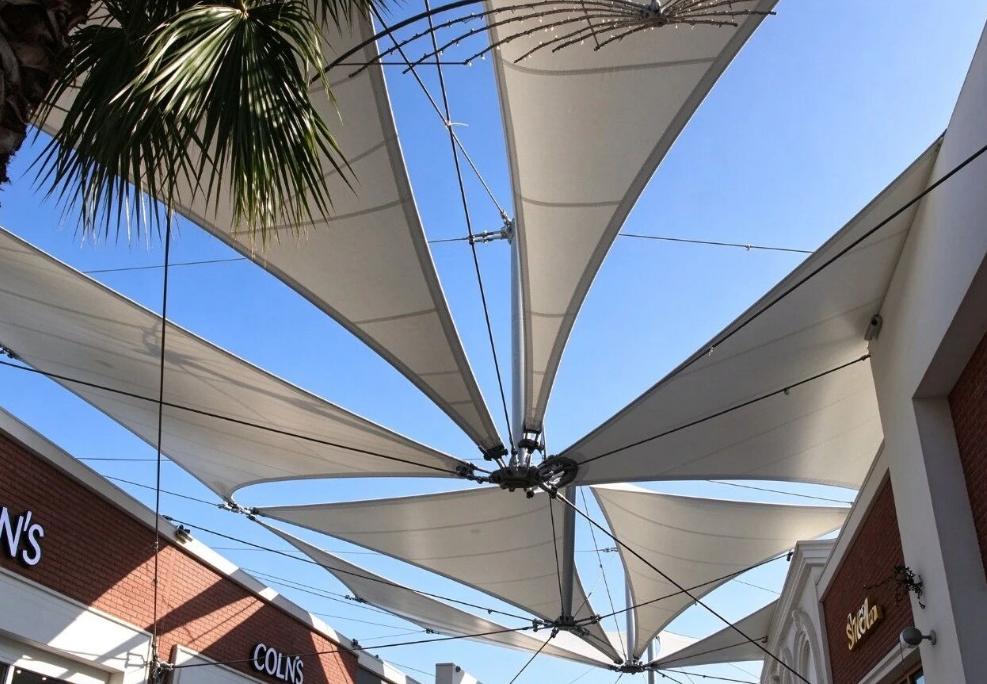
Stepping into the district, one is immediately struck by the aesthetic of this lightweight structural design. Departing from traditional, heavy roofing, the project employs a system of umbrella-like tensile membrane units. Each unit is anchored by a central column, with steel cables tensioning the fabric into stable, curved surfaces; the triangular membrane panels extend outward, overlapping in rhythmic layers. Looking upward, the gaps between the membrane panels and the sky create a geometric pattern, through which sunlight filters down, casting shifting, fluid patterns of light and shadow across the walkways. Palm trees, white buildings, storefront facades, and the crisp white membranes harmonize beautifully—the clean, soft lines mitigate the inherent heaviness of the rigid architecture, imbuing this open-air commercial district with a sense of “breathing space.”
A coastal setting poses a rigorous challenge for both materials and structural design. Proximity to the bay means the site is subject to high levels of salt spray, intense sunlight, and complex wind conditions. Every aspect of the design—from structural calculations to the selection of membrane materials—has been meticulously tailored to the coastal climate. High-performance, weather-resistant, self-cleaning, and corrosion-resistant materials were chosen; they effectively block harsh ultraviolet rays and provide shade and cooling for pedestrians, while still maintaining excellent light transmission. Whether shielding visitors from the sweltering heat on a sunny day or providing cover from the elements during rain, these structures create a comfortable, all-weather environment for shopping, leisure, and outdoor café seating—effectively encouraging visitors to stay longer and enlivening the coastal commercial atmosphere.
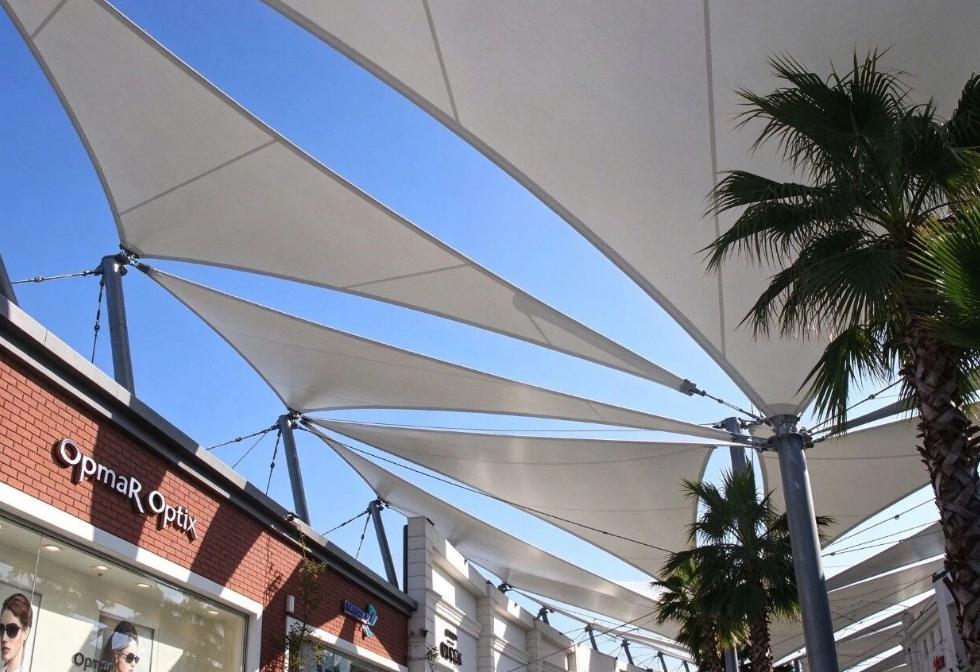
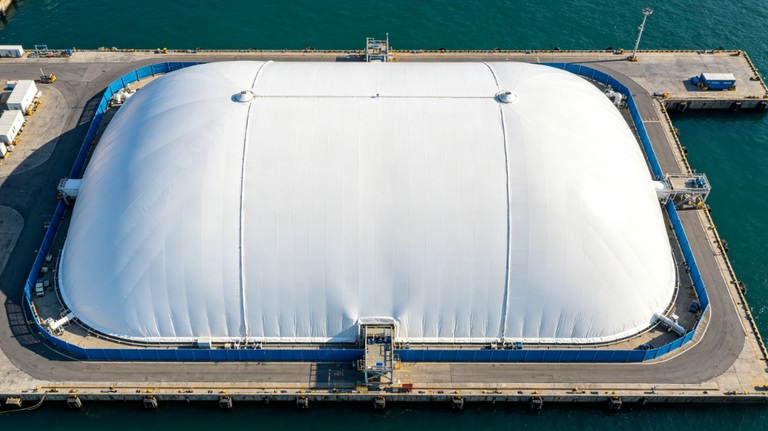
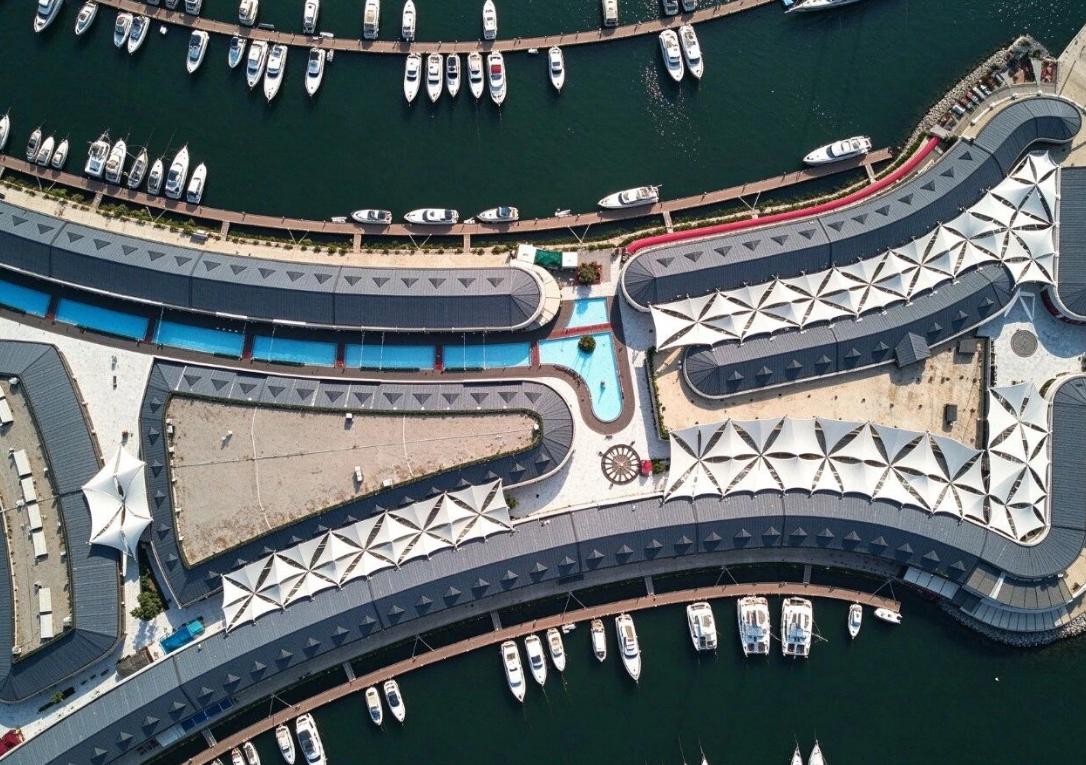
When viewed from the air, the layout of the entire membrane structure reveals even greater ingenuity. Individual, umbrella-like membrane units are arranged in an orderly fashion, extending along the circulation path of the commercial street. Following the natural curvature of the coastline, they create a cohesive landscape narrative that connects seamlessly with the harbor’s yacht marina.
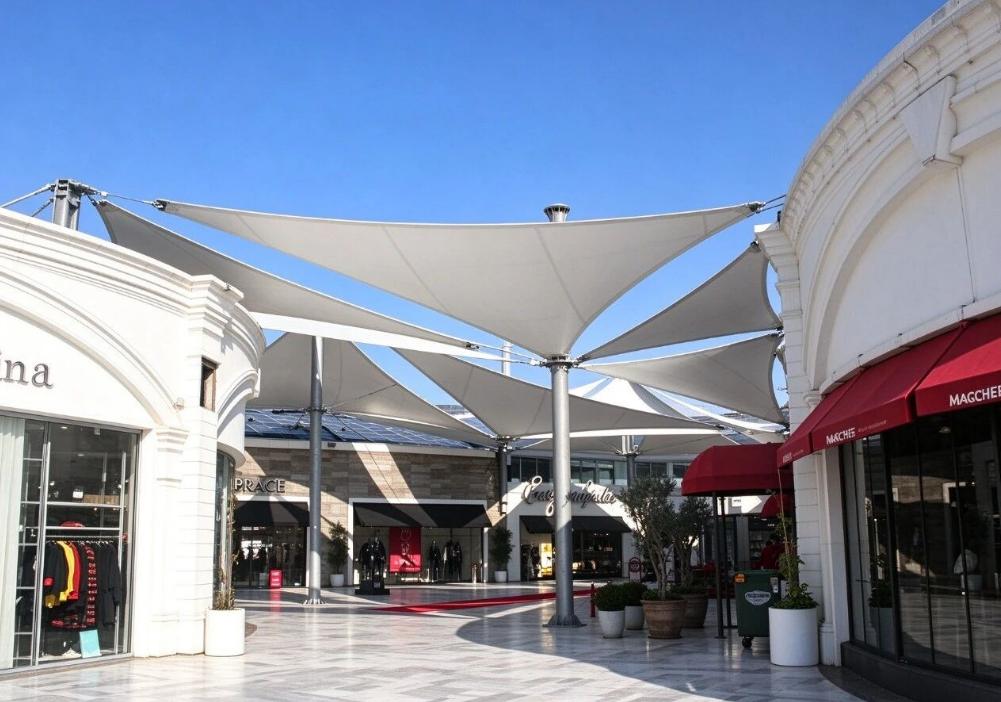
Each set of membrane units functions as both a distinct landscape focal point—linking together to form a continuous pedestrian corridor—and an open, airy structure that preserves expansive ocean views, striking a perfect balance between landscape, functionality, and visual accessibility. By day, the sail-like, pristine white membranes serve as striking landmarks, perfect for photography. As night falls, integrated internal lighting transforms the membranes into a softly glowing canopy, imbuing the commercial street with an entirely different, enchanting atmosphere.
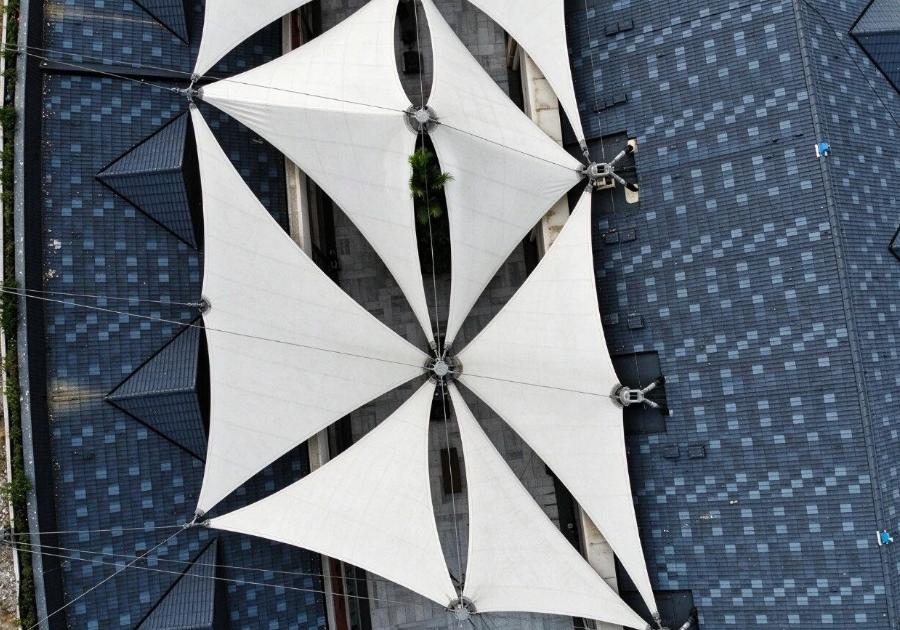
The allure of tensile membrane architecture lies in its use of lightweight technology to foster a symbiosis between nature and commerce. By dissolving the boundaries of enclosed spaces, it invites the unique coastal scenery into the heart of the district, turning shopping from a mere act of consumption into a leisurely stroll accompanied by sea breezes and the interplay of light and shadow.
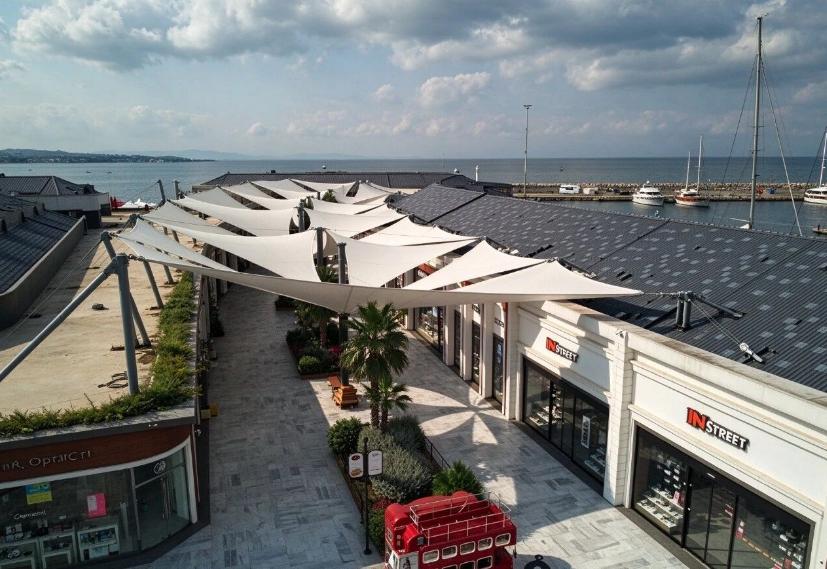
In an increasing number of cultural tourism developments, coastal districts, and leisure-oriented towns, tensile membrane structures have emerged as a preferred solution for spatial enhancement. Combining structural safety and durability with artistic expression, they use a minimalist design language to infuse public spaces with a vibrant, dynamic energy. Like sails catching the wind, these structures allow architecture to blend gently into the landscape of sea and shore.