Design Services
How HDPE Shade Canopies Cool Yuma Palms Mall in Arizona
In Yuma, a city in southwestern Arizona, the Yuma Palms Shopping Center has become a go-to destination for both local residents and visitors.

Located on the edge of the Sonoran Desert, Yuma experiences midday summer temperatures that frequently exceed 40°C (104°F), accompanied by some of the highest UV levels in the United States. For outdoor commercial spaces, this creates a challenging dilemma: during the day, few people are willing to linger in open-air pedestrian areas; outdoor dining spaces go unused; and storefronts become scorching hot under the relentless sun. The extreme climate effectively stifles any outdoor vitality. Today, however, as you step into the central pedestrian thoroughfare of this shopping center, an undulating, earth-toned HDPE (high-density polyethylene) mesh canopy overhead quietly addresses these issues.

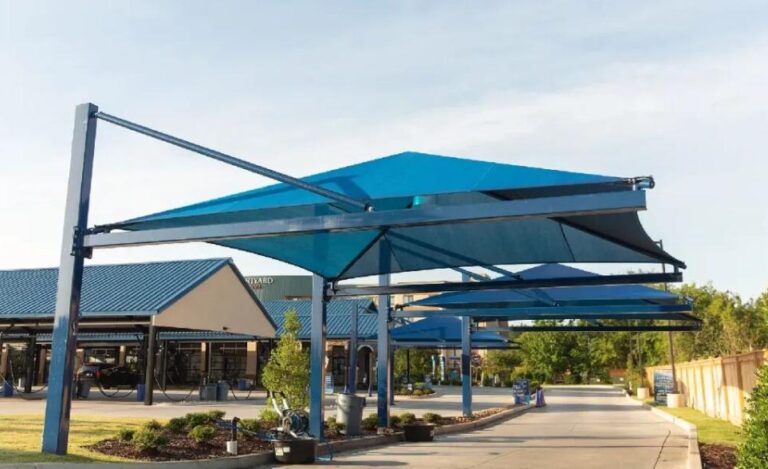
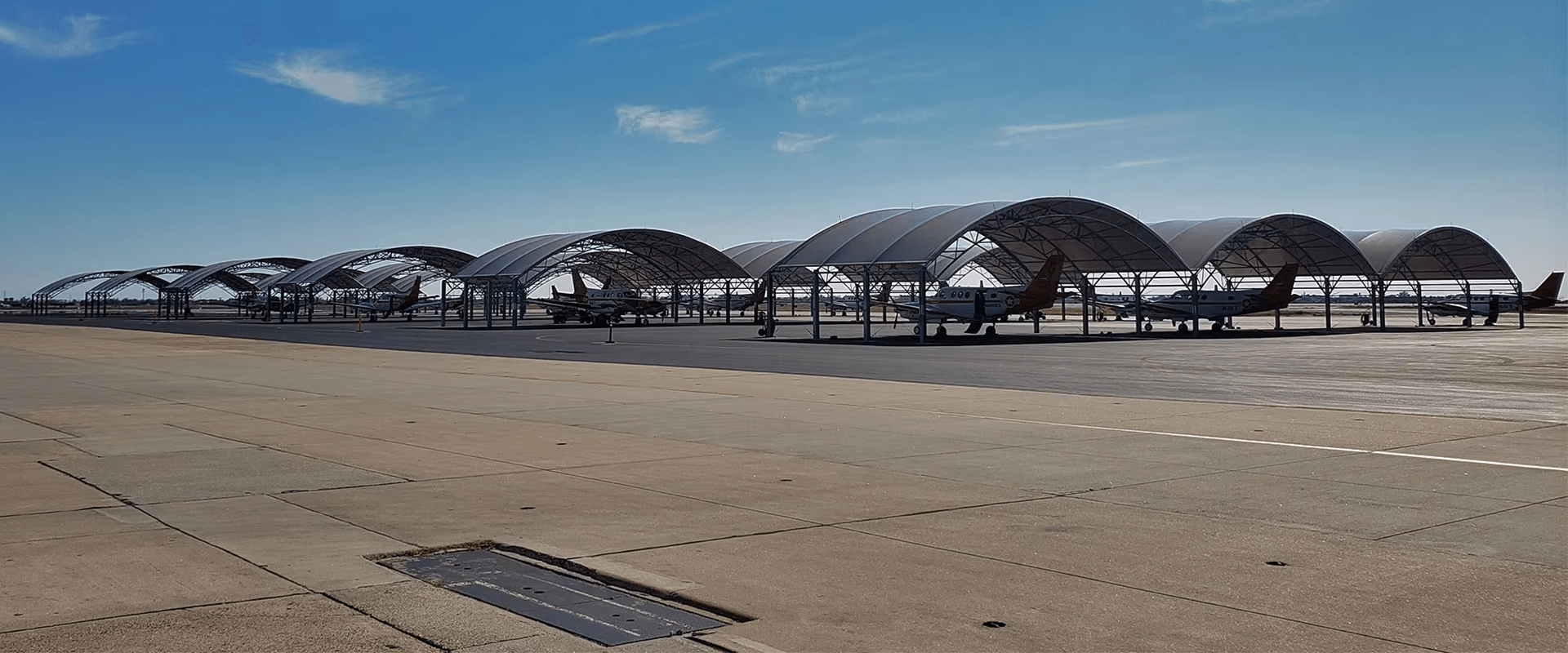
The HDPE mesh canopy stretches along the central axis of the commercial walkway, composed of multiple tensioned mesh panels. Circular steel columns are arranged neatly along both sides of the path, with slender steel cables pulling the mesh into elegant, doubly-curved forms.

From a pedestrian’s perspective, the texture of the mesh creates a translucent “canopy of shade” overhead. Sunlight filters through the fine, dense mesh, casting soft, shifting patterns of light and shadow across the ground. The silhouettes of palm trees intermingle with these patterns, completely dispelling the cold, oppressive feel often associated with the hard, paved surfaces of desert commercial districts. This is not an expensive glass roof, but rather a woven HDPE mesh—a material proven highly effective for outdoor shading in hot climates.

The primary value of the HDPE mesh in this project lies in its perfect balance between shading and ventilation. The intense heat in Arizona is caused not only by direct sunlight but also by the accumulation of heat due to poor air circulation. Traditional, fully enclosed PVC tarps or metal roofs may provide shelter from rain and sun, but they often create a stifling “steamer” effect underneath, leaving pedestrians drenched in sweat after only a few moments. The open-weave structure of the HDPE mesh membrane allows air to pass through freely; hot air escapes upward through the mesh apertures, while natural breezes flow in from the sides of the walkway, ensuring constant air circulation beneath the canopy. Field measurements indicate that in areas covered by the HDPE mesh membrane, the perceived temperature can be 6 to 8°C lower than in areas exposed to direct sunlight. This creates a relatively comfortable environment for outdoor dining—even at midday in the height of summer—encouraging customers to sit down for a coffee or lunch, and significantly extending the time visitors spend in the commercial district.
Weather resistance is a critical consideration in an extreme climate like Yuma’s. During production, the HDPE mesh membrane is infused with full-spectrum UV-resistant masterbatch, enabling it to withstand the intense ultraviolet radiation of the Sonoran Desert over the long term. Unlike conventional fabric awnings, which often begin to chalk, fade, or become brittle within two to three years, this material maintains its integrity.

The hydrophobic properties of the membrane surface prevent desert dust from adhering; a few rain showers are sufficient for self-cleaning, sparing the mall operators the annual labor costs and expenses associated with high-altitude cleaning. Furthermore, the open-weave design significantly reduces wind loads.

During the occasional sandstorms characteristic of the desert, wind pressure passes through the mesh rather than exerting force against a solid surface, resulting in a level of structural safety far superior to that of a solid roof.

From a commercial standpoint, the returns generated by this HDPE mesh membrane canopy far exceed the initial investment in the material. The improved shaded environment directly boosts the utilization rate and revenue-per-square-meter of outdoor dining areas. The enhanced comfort of the pedestrian walkways attracts more families, who are then more likely to linger and make purchases.

Moreover, the earthy-yellow, mesh-like texture harmonizes with the desert landscape and palm vegetation, creating a cohesive and distinctive visual identity that has turned the shopping center into a unique, “Instagrammable” destination.

For commercial projects located in hot, arid regions, an HDPE mesh canopy is not merely an ornamental flourish; it serves as essential infrastructure that activates outdoor commercial space—providing, in the most lightweight manner possible, a cool refuge where consumers can truly linger.