Design Services
Sustainable Value & Maintenance of HDPE Shade Mesh
For landscape projects, completion is merely the starting point; the long-term operational and maintenance (O&M) phase is the true test of a shading system’s overall value. Many shading designs look stunning on paper, yet fall into disrepair or fade within just a few years—often because the initial design failed to account for the realities of long-term maintenance.

The sustainability of HDPE mesh membranes lies not only in the recyclability of the material itself, but also in its suitability for the operational constraints—such as limited staffing—frequently encountered in municipal and commercial projects in China.

Modified HDPE is chemically stable and resistant to moisture, as well as mild acids and alkalis. It possesses natural self-cleaning properties: rainwater washes away most surface dust, eliminating the need for frequent, high-altitude cleaning operations and significantly reducing the demand for labor and specialized equipment.

In contrast, glass skylights or solid-coated membranes tend to accumulate grime and dirt, necessitating regular high-altitude maintenance that drives up long-term costs. While “self-cleaning” does not mean “maintenance-free,” the system only requires simple, periodic inspections—such as checking tension levels and looking for signs of corrosion on metal components—to ensure everything remains secure. These minor, routine checks can exponentially extend the service life of the entire system.

Modularity is another key aspect of its sustainability. The mesh membrane system is typically fabricated in individual panels, each bearing its own load. If a specific section is accidentally damaged, only that individual panel needs to be replaced—there is no need to dismantle or swap out the entire structure. This results in lower repair costs, shorter downtime, and minimal disruption to the site’s ongoing operations.

At the end of its designed service life, the HDPE material can be fully recycled and repurposed. Unlike composite membrane materials with complex, mixed coatings—which are difficult to process—HDPE helps reduce solid waste, aligning with current urban landscape development goals focused on low-carbon construction.

Many projects fall into the trap of “prioritizing construction while neglecting maintenance.” By fixating solely on the lowest initial capital expenditure and opting for lower-grade membrane materials, owners often end up facing repeated repairs and replacements—ultimately resulting in a higher total cost of ownership. A full life-cycle design approach requires us to integrate future inspection, replacement, and recycling considerations into the initial planning phase.

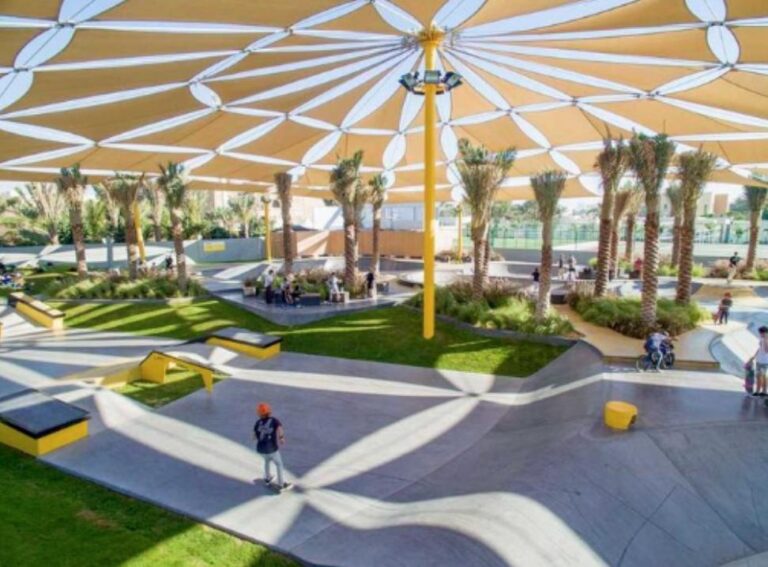
HDPE mesh membranes offer a balance between construction investment, operational costs, and environmental friendliness. An excellent outdoor shading solution is more than just an attractive rendering; it is a comprehensive system designed for quiet, stable, and long-term performance—a low-maintenance presence that evolves alongside the site it serves.