Design Services
Technical Challenges of Freeform ETFE Membrane Roofs
ETFE (ethylene tetrafluoroethylene) membrane structures are widely used in modern architecture due to their unique advantages; however, they present numerous technical challenges when applied to freeform (non-standard or complex) geometries.
In terms of design, while ETFE membrane material possesses a certain degree of flexibility, its relatively low strength places extremely high demands on the fabrication precision of the supporting steel structure. The design shrinkage rate for ETFE is generally less than 1%—significantly lower than that of traditional PVC or PTFE membrane materials. For freeform shapes, the complex geometry substantially increases the difficulty of designing and fabricating the steel framework. If the precision of the steel structure fails to meet requirements, the membrane may not fit correctly during on-site installation; furthermore, excessive tensioning can lead to damage to the membrane material. Additionally, the mechanical analysis of freeform ETFE structures is far more complex, requiring precise calculations of the stress distribution across various parts of the membrane to ensure the overall stability and safety of the structure.
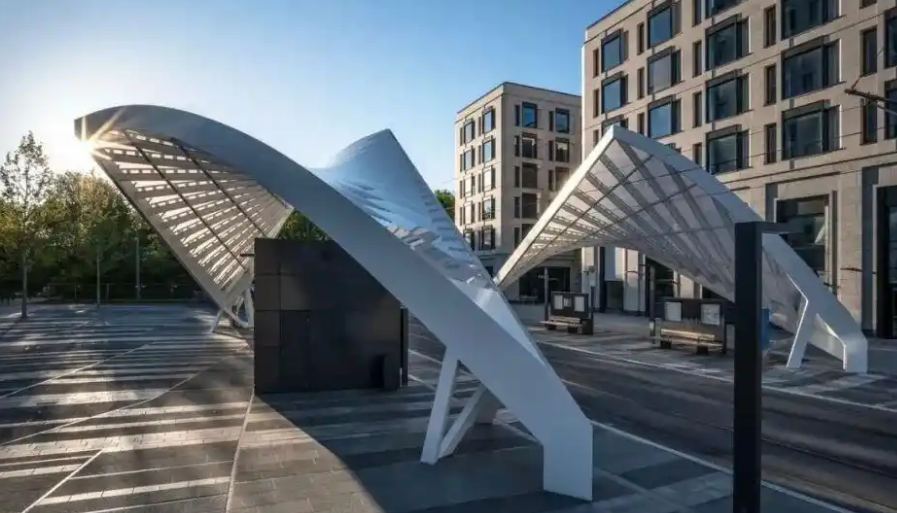
The manufacturing phase is equally challenging. Current fabrication processes impose significant limitations on the realization of freeform ETFE shapes. Developing an ETFE membrane project typically requires close collaboration between architects, membrane structure engineers, and fabrication and installation specialists. When dealing with the boundaries of freeform shapes—particularly precise arcs or curves—it is often necessary to approximate these lines using a series of straight-line segments (polylines). For arcs with large radii, experienced membrane structure contractors may be able to use automated welding techniques to achieve an approximation; however, for arcs with smaller radii, manual welding is often required. This not only increases the complexity and cost of manufacturing but also makes it difficult to ensure consistent quality across every joint. A notable example is the “Water Cube” (National Aquatics Center) in Beijing, which features a surface composed of over 3,800 ETFE cushions, each with a unique shape and size—a project that posed immense challenges for the manufacturing and processing of the membrane material.
The installation process represents a major challenge for complex, non-standard ETFE structures. Due to the relatively low strength of ETFE foil, even with meticulous design and fabrication, a lack of deep understanding regarding the material’s properties and installation techniques among the installation crew can lead to structural defects. Achieving the intended design geometry requires precise control over the tensioning force and sequence of the ETFE foil during installation. For instance, in complex curved structures, ensuring uniform tensioning—while avoiding localized stress concentrations or the formation of wrinkles—is a critical aspect of the installation process. Furthermore, such non-standard ETFE structures often require integration with other complex support systems, which further increases the difficulty and risks involved in installation.
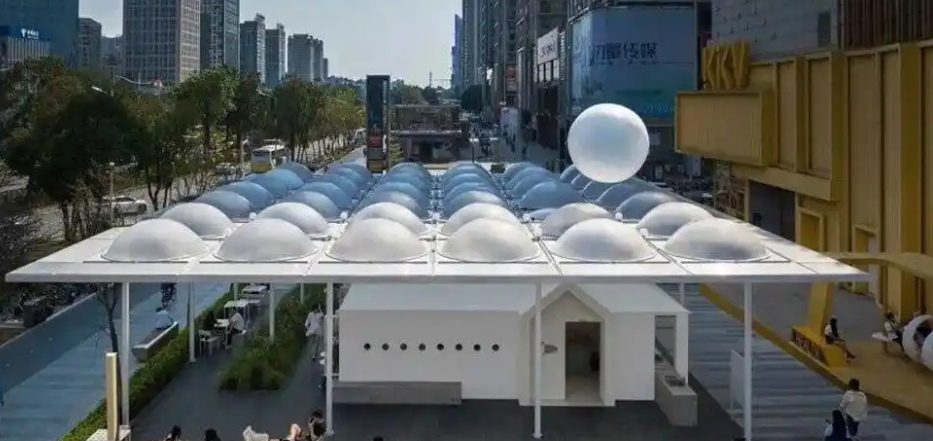
Additionally, the detailing of waterproof joints poses a significant challenge for complex ETFE structures. These designs often feature a greater number of corners and edges, which are inherently difficult to waterproof. This is particularly true where ETFE foil meets materials of a different nature; since these materials cannot be directly heat-welded together, alternative jointing methods must be employed. If these connections are not executed correctly, they can become potential points of water leakage, compromising the building’s functionality.
Complex, non-standard ETFE structures present numerous challenges across the stages of design, fabrication, installation, and the detailing of waterproof joints. Realizing the full potential of such designs requires the collaborative effort of architects, engineers, and construction professionals. Through continuous exploration and innovation, these technical hurdles can be overcome, ultimately leading to the creation of unique, aesthetically striking, and highly functional ETFE structures within the architectural landscape.
Send fee