Design Services
Layered Fabric Shade Sails: Sculptural Sun Protection
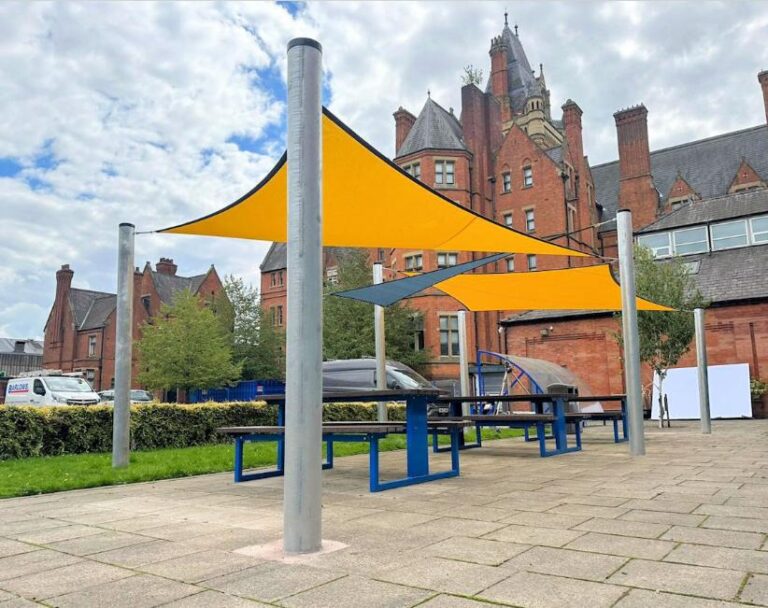
When people think of outdoor shading, the first image that often comes to mind is a single, flat shade sail—a basic solution that serves only the most fundamental purpose. Multi-layered, modular HDPE mesh tension sails transcend this simplistic approach. By arranging multiple membrane panels in an overlapping, multi-level configuration, they integrate structural mechanics, UV protection, and spatial aesthetics, offering a sophisticated, multi-dimensional shading solution for a wide range of public outdoor spaces.
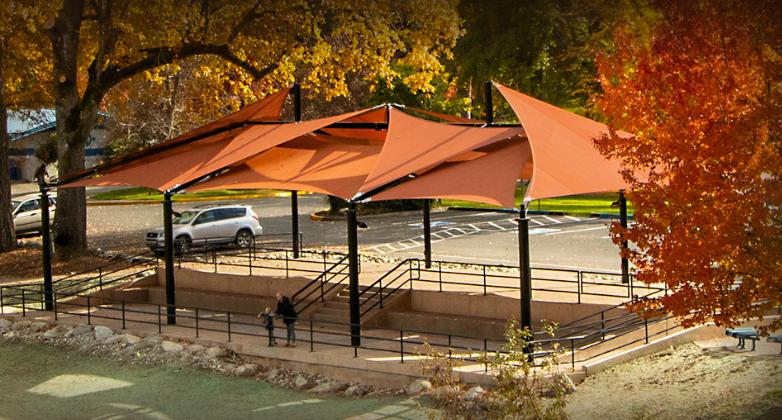
Unlike a basic, single-layer sail, these multi-layered systems utilize coated steel frameworks and comprehensive stainless-steel hardware to support the complex tension dynamics of multiple membrane panels. HDPE mesh membranes in various colors and angles are interwoven and layered at different heights; rather than a flat, two-dimensional canopy, they create a rich, three-dimensional silhouette overhead.
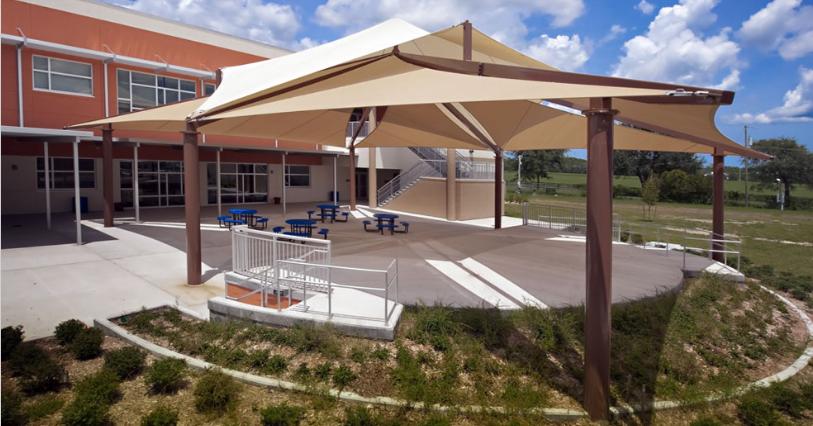
The natural gaps left between the membrane panels prevent the formation of a sealed, airtight roof. At the same time, the overlapping layers enhance overall UV-blocking performance, effectively filtering out the vast majority of harmful ultraviolet rays. This safeguards the skin health of those beneath—making these systems particularly well-suited for outdoor areas frequently used by children.
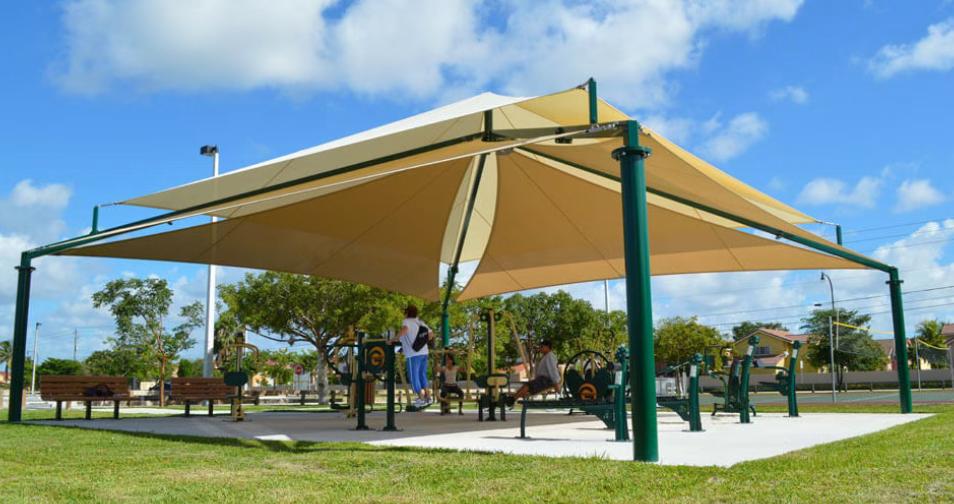
This layered construction also offers a distinct advantage in terms of ventilation. The overlapping membranes create multiple channels for airflow, allowing the breeze to circulate freely between the panels. This dissipates heat that would otherwise accumulate under the canopy, effectively lowering the ambient temperature beneath the structure.
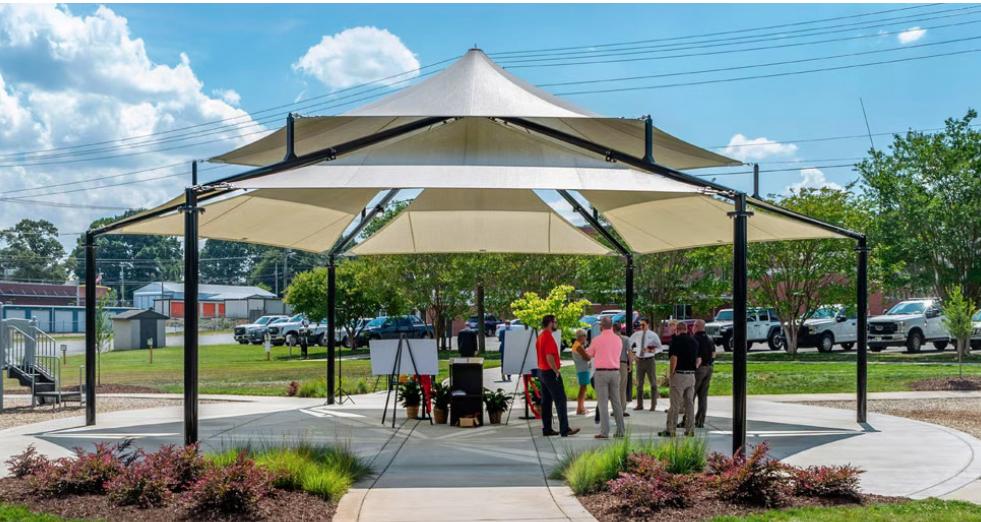
Even at high noon in the middle of summer, the space beneath remains comfortable, avoiding the stifling heat often associated with fully enclosed roofs. Rainwater is channeled along the surface of each membrane toward the edges, and the overlapping layout prevents water from pooling—eliminating the need for complex drainage systems and simplifying the overall engineering requirements.
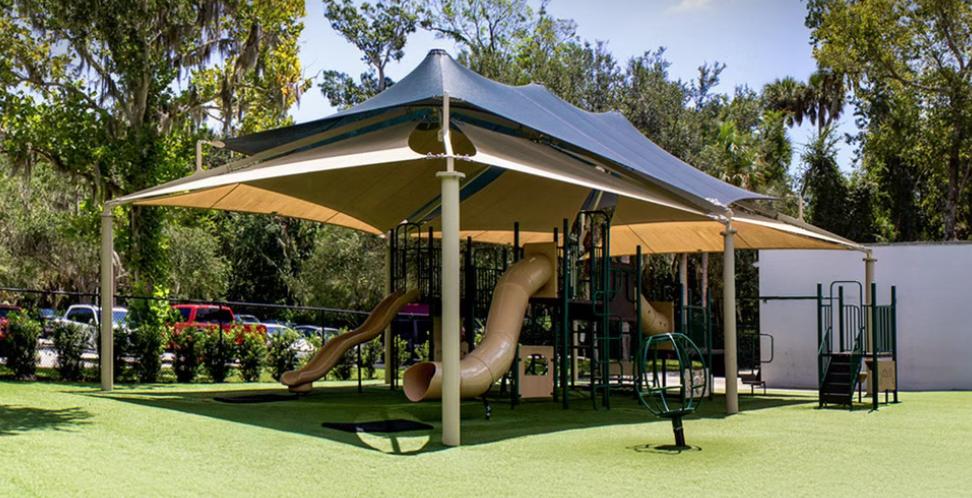
With a wide array of color options, these multi-layered sails offer exceptional design versatility. By combining mesh membranes in different hues—whether through soft, harmonious blends or bold, striking contrasts—one can craft a unique atmosphere and distinct character for any given space. As sunlight filters through the overlapping mesh layers, it casts a complex, ever-changing interplay of light and shadow upon the ground. These patterns shift in response to the sun’s movement, imbuing a static shading structure with a dynamic, artistic quality.
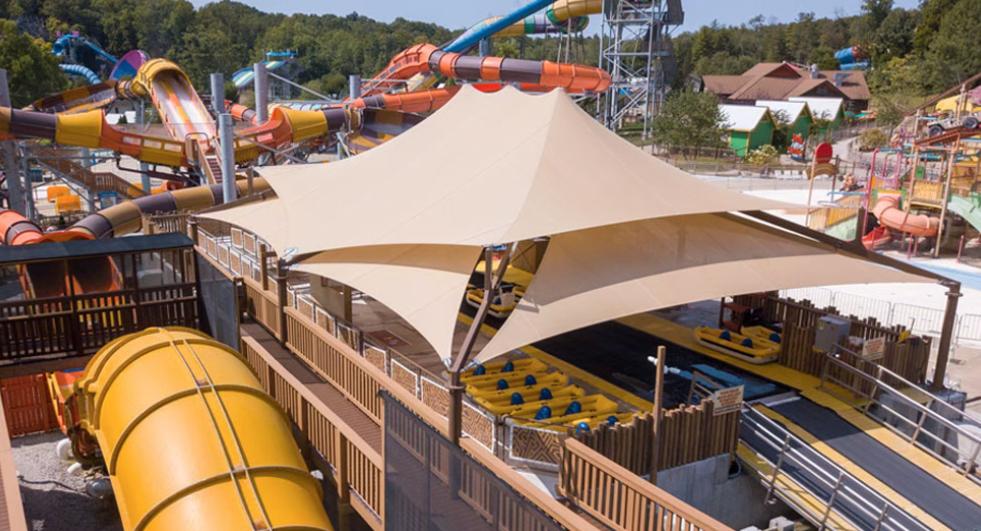
This tensioned system also allows for the integration of lighting; as night falls, light diffuses from between the membrane layers, transforming what served as a daytime sunshade into an atmospheric, evocative spatial installation.
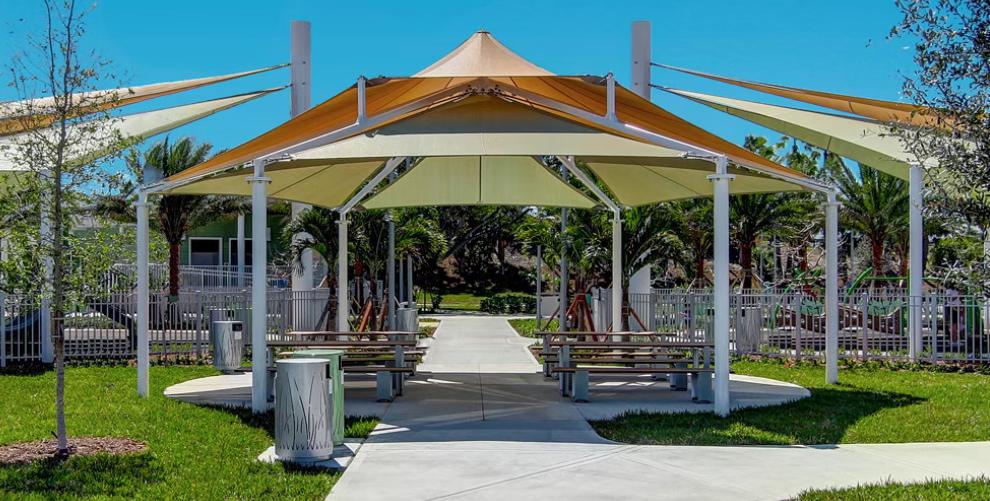
From children’s playgrounds and sports stadium bleachers to open-air amphitheaters, picnic areas, and outdoor commercial seating, these multi-layered tensioned sails are highly adaptable to a wide variety of public spaces. For sites with irregular shapes or complex boundaries, the number, angle, and arrangement of the membrane panels can be flexibly adjusted—eliminating the need to force the site to conform to a rigid, rectangular canopy design.
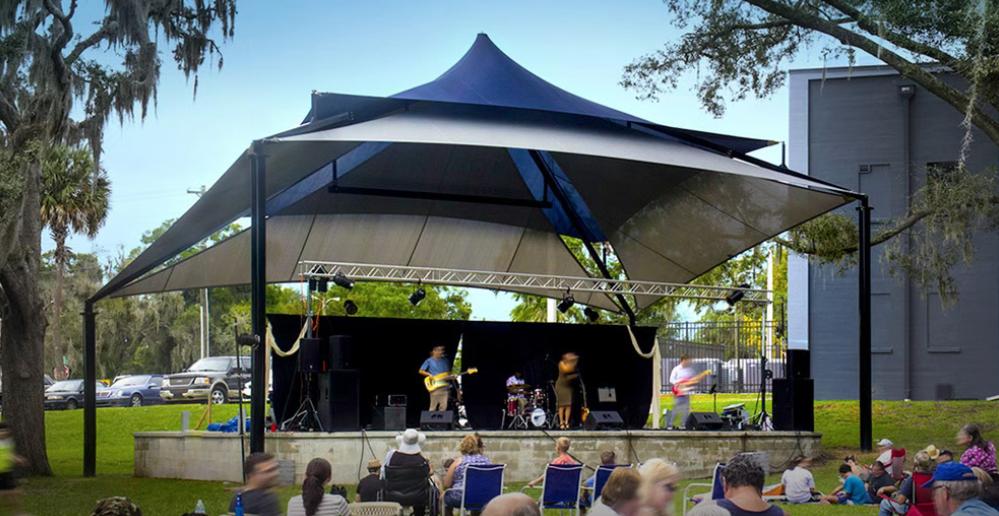
In outdoor spatial design, shading is no longer merely a functional requirement. Multi-layered HDPE mesh tensioned sails demonstrate that an effective shading system does more than just block the sun; it shapes a nuanced, atmospheric transitional space in the air. By seamlessly blending sun protection, ventilation, and aesthetic appeal, such systems unlock new design possibilities for public outdoor environments.