Design Services
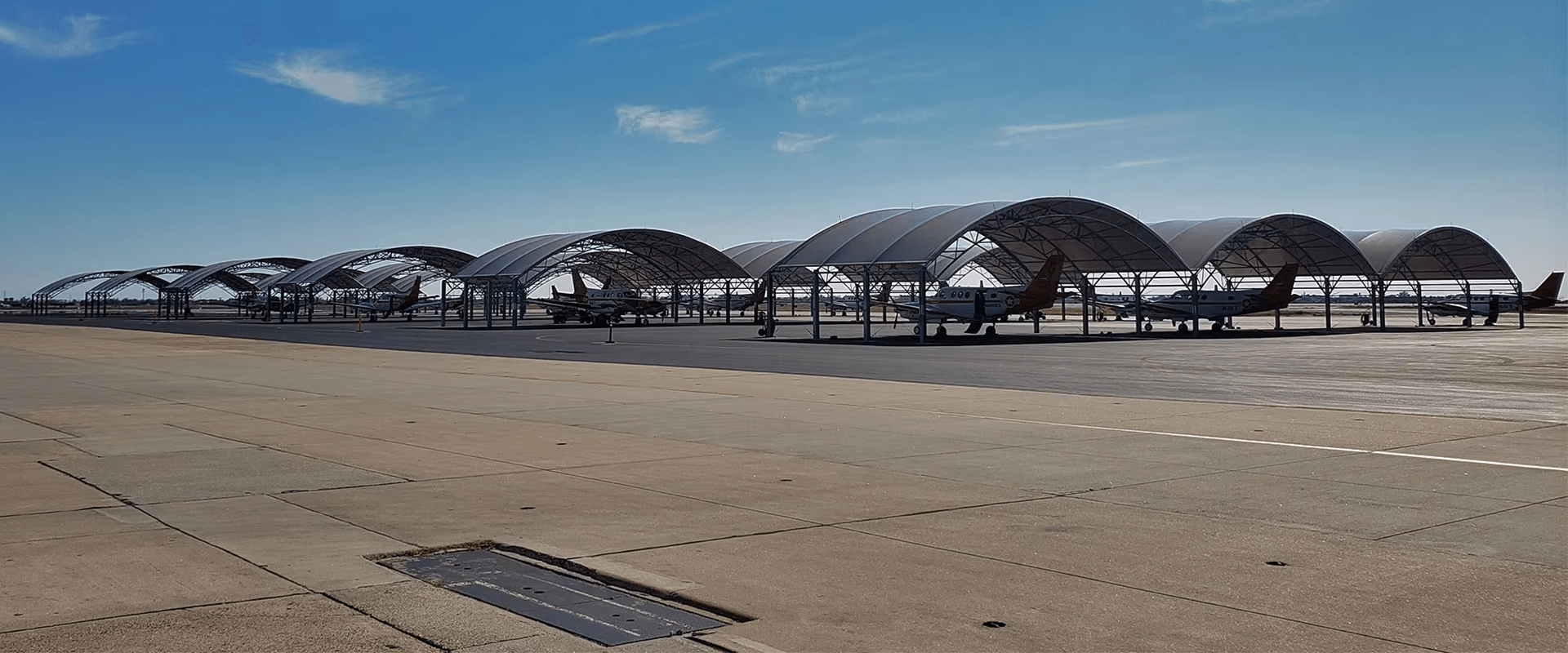
How Madinah Airport’s Tensile Roofs Blend Form & Function
In the vast, arid desert landscape of Medina, Saudi Arabia, the Prince Mohammad bin Abdulaziz International Airport achieves a balance between architectural aesthetics and practical functionality under extreme climatic conditions through a systematic tensile membrane shading system. Spanning the terminal, pedestrian walkways, parking areas, and facilities dedicated to Hajj pilgrims, these membrane structures are more than mere sunshades; they represent a lightweight architectural solution tailored for high-temperature, high-solar-radiation environments—a benchmark for the implementation of membrane structures in large-scale international transport hubs.

Western Saudi Arabia is characterized by intense heat, strong solar radiation, and persistent sandstorms—conditions that cause conventional roofing to rapidly absorb heat and degrade. The core value of this tensile membrane system lies in its ability to shield against the scorching sun and facilitate the dissipation of hot air. Leveraging the high reflectivity of the membrane material, the system significantly lowers temperatures in the spaces beneath, creating a comfortable environment for travelers as they walk or wait. Viewed from the air, the expansive, undulating white membrane units appear like a series of clouds scattered across the desert, harmonizing with the rolling Gobi-like terrain in the distance—a design that is both orderly and rhythmic. The modular unit design allows for rapid assembly over large areas, making it highly adaptable to the airport’s diverse outdoor spaces, including extensive walkways, bus bays, and parking lots.

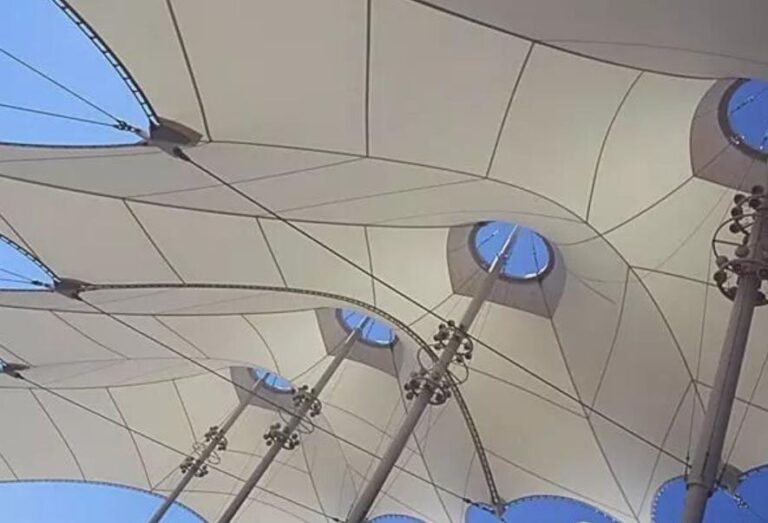
The most distinctive design feature of the project is its branching, tree-like steel support structure. These biomimetic columns extend upward and branch out to hold the curved membrane surfaces; by minimizing the number of ground-level supports, they create an open, airy, and unobstructed passage. Inside the walkways, the interlocking white steel framework creates a sense of structured order, while the membrane surfaces softly diffuse natural light—eliminating the harsh glare of direct sunlight. This reduces the need for artificial lighting during the day, promoting both energy efficiency and a refined spatial atmosphere. This tree-like support system marries structural efficiency with visual elegance, providing large, unencumbered spans that effectively accommodate the high foot traffic and complex movement patterns typical of an airport environment.
The project encompasses a comprehensive range of settings—from the entrance walkways of the main terminal and Hajj bus drop-off zones to shaded, accessible parking areas—integrating membrane structures throughout the entire passenger journey. The shading units above the accessible parking spaces feature precise detailing and clear signage, balancing functional utility with a human-centric approach. Meanwhile, a series of interconnected corridors—formed by a continuous expanse of membrane—create an all-weather pedestrian pathway, perfectly suited to the high-volume passenger flow experienced during the Hajj season. While the membrane units across various zones share a unified design language, their specific arrangement is tailored to site-specific load requirements and pedestrian traffic patterns, ensuring a cohesive overall aesthetic alongside flexible, localized adaptation.

In terms of materials and construction, the project addresses the harsh, high-UV, and dust-prone environment of Saudi Arabia by utilizing weather-resistant, self-cleaning coated fabrics. These materials resist UV-induced degradation, and their self-cleaning properties allow accumulated sand and dust to be washed away by rain, thereby reducing long-term maintenance costs. The tensioning process ensures precise control over the membrane’s pre-tension, maintaining a stable, curved form capable of withstanding desert gusts without sagging or deforming over time. The system’s inherent lightweight nature offers significant advantages: compared to concrete or metal roofing, it substantially lowers foundation load requirements—a key benefit in the open expanse of an airport site—which reduces civil engineering costs and accelerates construction timelines.

Today, an increasing number of overseas infrastructure, cultural tourism, and transport hub projects under the “Belt and Road Initiative” are adopting tensile membrane structures to provide shading and large-span coverage in extreme climates. The membrane system at Medina Airport serves as a clear industry benchmark: an effective membrane structure is more than just a decorative element; it is a solution rooted in a deep understanding of local climate and passenger needs. By leveraging lightweight structural design, high-performance materials, and standardized modular components, it creates a comfortable, shaded sanctuary beneath the scorching desert sun.

When architecture exists in symbiosis with the local climate, even a thin, lightweight membrane surface can become the most compelling feature of a transport landmark.