Design Services
Breathable HDPE Mesh Membranes for Budget Outdoor Shade
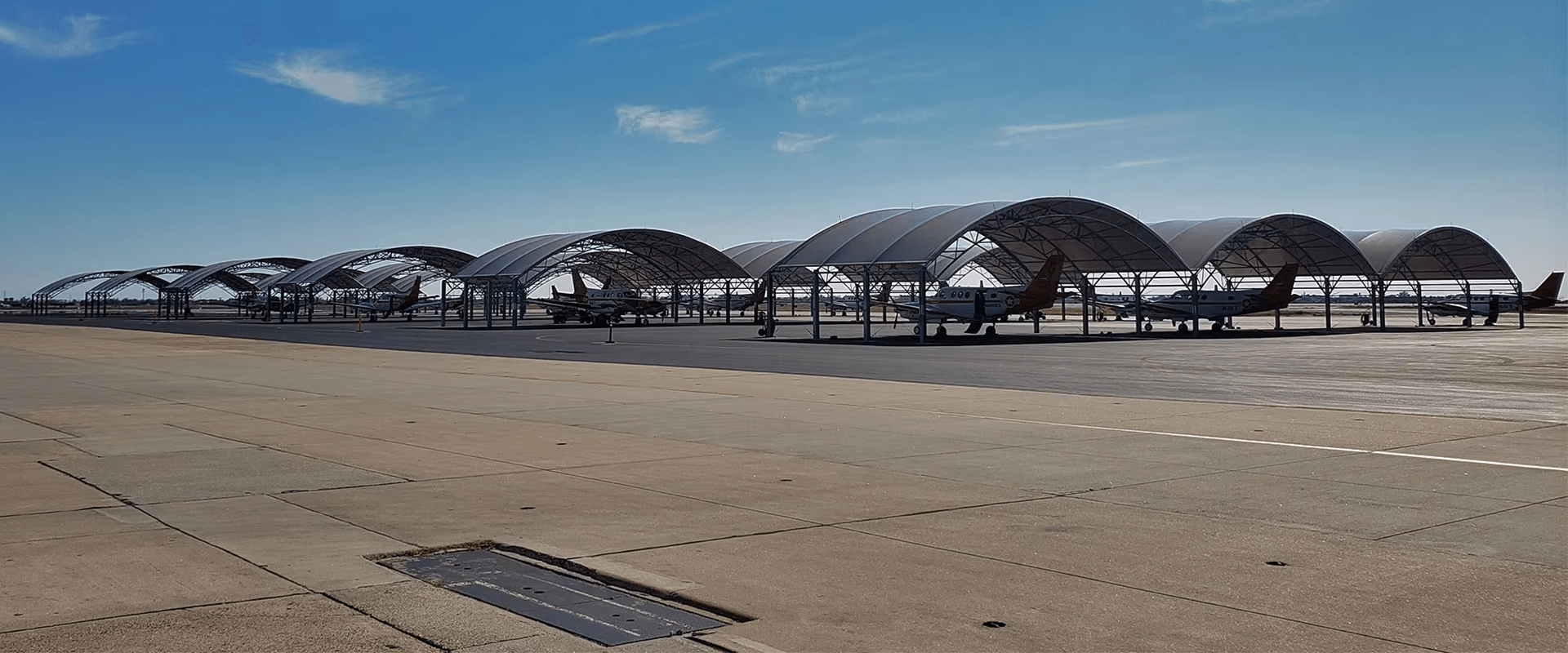
In the realm of landscape and architectural shading solutions, ETFE membranes and tensioned fabric structures often take center stage. In contrast, HDPE (high-density polyethylene) mesh—a simple, utilitarian engineering material—is rarely discussed on its own. Woven from HDPE filaments, this mesh is a highly practical choice for shading outdoor “gray spaces”—such as streets, courtyards, farms, and rest areas. In both temperate and hot climates, it creates shaded environments that remain well-ventilated.

The primary distinction between HDPE mesh and solid, impermeable membrane materials lies in its porous, grid-like structure. Conventional awnings or solid membranes block light entirely, but this comes at the cost of restricted airflow; heat can accumulate underneath, turning the space into a stifling, oven-like “heat island.” HDPE mesh, however, features a semi-permeable woven structure. It filters sunlight—transforming harsh, direct light into soft, diffused light—while allowing air to pass freely through its apertures.

Its core advantage is the ability to provide shade without trapping heat, as breezes can carry away thermal energy from the shaded area. HDPE mesh is available with varying shading factors—typically ranging from 30% to 90%—allowing designers to select the ideal density for a given application. For instance, a shading factor of 50%–70% is often used in courtyard rest areas to strike a balance between soft, filtered light and good ventilation, while higher shading factors are chosen for plant nurseries or exposed outdoor walkways to lower the ambient temperature beneath.

The inherent properties of the material ensure exceptional durability in outdoor settings. By incorporating UV-stabilizing additives, the HDPE raw material is rendered resistant to long-term sun exposure, preventing it from becoming brittle or cracking over time. It is extremely lightweight and easy to install, requiring no complex or heavy steel structural support; a simple framework of steel pipes or cables is sufficient to suspend and tension the material into shape. It can be configured as a continuous, unified canopy, or arranged in separate, tilted, or staggered sections—making it highly adaptable to irregular sites, temporary markets, street-side rest areas, and landscape pergolas. Compared to PTFE or ETFE tensioned membranes, it is more cost-effective, offers a shorter construction cycle, and is easier to replace or maintain, making it an ideal choice for public spaces with limited budgets that require large-scale shading.

In landscape design, the aesthetic potential of HDPE mesh shading is often underestimated. Many perceive it merely as agricultural shade netting with a coarse texture; however, through precise tensioning design, it can be transformed into a highly expressive architectural skin. The mesh casts fluid, dappled shadows on the ground—shifting as the sun moves—to create a dynamic interplay of light and shadow. Unlike the static, uniform shadows cast by rigid roofs, the dappled light filtered through HDPE mesh evokes a sense of relaxed ease. This makes it particularly well-suited for park seating areas, outdoor commercial terraces, or waterfront pergolas—spaces where a natural atmosphere is desired. Because it does not completely block the sky, the mesh allows for glimpses of clouds and the changing hues of the heavens, preserving the open, airy quality of the outdoor environment.

Naturally, HDPE mesh shading has its limitations. As a shading element, it offers no protection against rain, which passes directly through the mesh. Its tensile strength is also significantly lower than that of specialized architectural membranes, making it unsuitable for permanent roofing over ultra-wide spans or in areas subject to high wind loads. Furthermore, its modest, understated texture may not align with the aesthetic of highly refined landmark architecture. Its purpose is not to replace high-end tensioned membranes, but rather to offer an alternative shading strategy that is lightweight, affordable, and highly flexible.

Amidst the growing focus on low-carbon landscapes and cost-effective construction, HDPE mesh shading is once again gaining attention from designers. It eschews elaborate material narratives, instead employing a simple woven structure to address the most fundamental needs in a hot climate: light filtration, ventilation, and cooling. From rural courtyards and urban pocket parks to outdoor commercial seating areas, its lightweight mesh creates comfortable shade—demonstrating that effective sun-shading design does not require expensive, specialized membrane materials. Rather, a shelter that allows the breeze to pass through and light and shadow to play across the space is the ideal solution for the outdoors.